
Identity theft is one of the fastest-growing crimes in the digital age. From hackers to scammers, your personal information is constantly at risk. Learning how to prevent identity theft is crucial to protect your finances, reputation, and peace of mind. In this guide, we’ll cover practical strategies, from online security tips to protecting the information of deceased loved ones.
Why Identity Theft Happens
Identity theft occurs when someone steals personal data—like Social Security numbers, bank details, or credit card information—to commit fraud. Common targets include:
- Individuals with weak online security
- Elderly people or vulnerable family members
- Recently deceased persons whose information is unmonitored
Understanding the risks helps you stay proactive.
Practical Tips for Preventing Identity Theft
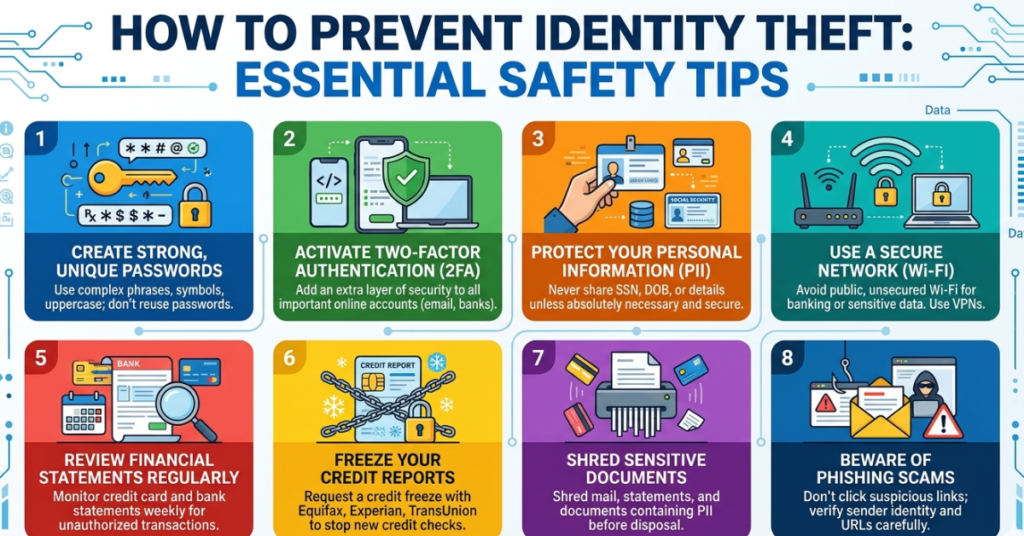
Here are some actionable strategies everyone can use:
1. Secure Your Online Accounts
- Use strong, unique passwords for each account.
- Enable two-factor authentication (2FA) wherever possible.
- Avoid sharing sensitive information on unsecured websites or public Wi-Fi.
2. Monitor Your Financial Statements
- Regularly check bank and credit card statements for unusual activity.
- Sign up for credit alerts to track new accounts opened in your name.
3. Protect Personal Documents
- Shred documents containing sensitive information before disposal.
- Store passports, Social Security cards, and tax documents in a safe place.
4. Limit Sharing of Personal Information
- Avoid oversharing personal data on social media.
- Be cautious when giving out your Social Security number or financial details.
Special Considerations: Preventing Identity Theft of a Deceased Person
Unfortunately, scammers sometimes target the identities of deceased individuals. To prevent this:
- Notify financial institutions and creditors of the person’s death.
- Close all active accounts in the deceased’s name.
- Monitor credit reports for fraudulent activity.
- File a notice of death with the Social Security Administration to prevent misuse.
Taking these steps ensures that a loved one’s identity is protected even after passing.
Additional Safety Measures
- Use antivirus software and update it regularly.
- Avoid responding to suspicious emails, calls, or texts asking for personal data.
- Keep an updated list of authorized contacts for financial or legal matters.
FAQs About Identity Theft
Q1: What is the most common form of identity theft?
A: Financial fraud, including stolen credit card or bank account information, is the most frequent type.
Q2: How can I check if my identity has been stolen?
A: Monitor your credit reports, bank statements, and any unfamiliar accounts. Many services offer free alerts for suspicious activity.
Q3: Can identity theft happen after death?
A: Yes. Scammers can use a deceased person’s Social Security number or accounts. Following proper notification and account closure procedures is crucial.
Q4: Are there government resources for protection?
A: Yes. The Federal Trade Commission (FTC) provides guidance and tools for preventing identity theft.
Conclusion
Protecting yourself and your loved ones requires vigilance and consistent habits. From securing online accounts to monitoring financial statements and safeguarding the identity of deceased family members, knowing how to prevent identity theft empowers you to stay one step ahead of scammers. Start implementing these strategies today to secure your personal and family information.