
Have you ever wondered how vinegar is produced and why it has that tangy flavor? Vinegar has been used for thousands of years in cooking, cleaning, and even traditional remedies. Its production may seem complex, but it relies on a surprisingly natural process.
In this article, we’ll explain the vinegar-making process, including fermentation, ingredients, and different types. By the end, you’ll understand both homemade and commercial vinegar production.
Key Ingredients for Vinegar
Vinegar begins with two essential components:
- A sugar source (fruit, grains, or alcohol)
- Beneficial bacteria (Acetobacter)
These bacteria turn alcohol into acetic acid, creating the familiar sour taste.
Common sources include:
- Apples → apple cider vinegar
- Grapes → wine vinegar
- Rice → rice vinegar
- Barley/malt → malt vinegar
- Sugar cane → white vinegar
Natural Vinegar Production
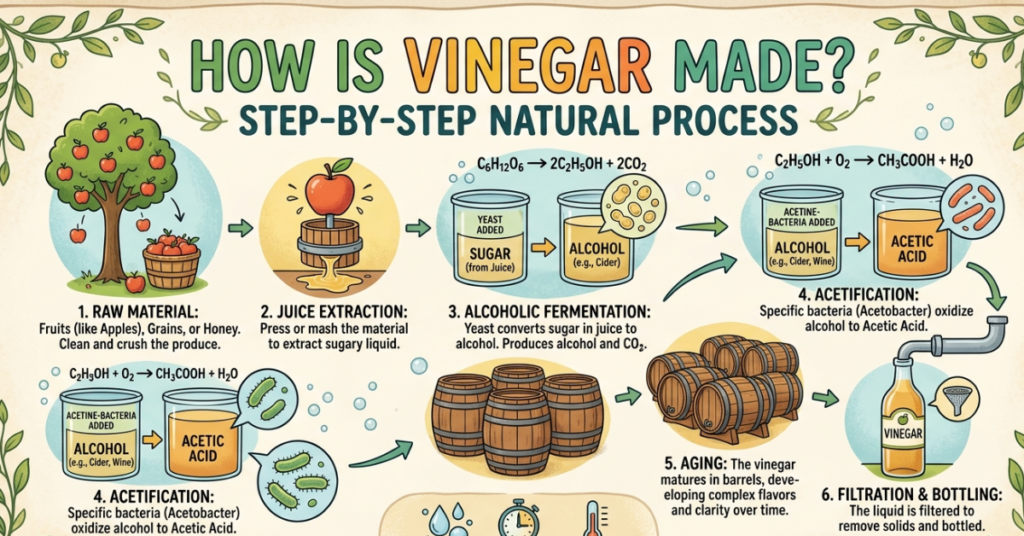
Making vinegar naturally relies on fermentation. The process happens in two stages:
- Yeast converts sugar into alcohol
- Bacteria convert alcohol into acetic acid
Given the right conditions—oxygen, warmth, and time—the liquid transforms into vinegar without artificial additives.
Step-by-Step Vinegar Production
Step 1: Select a Sugar Base
Start with fruit juice, wine, or grain mash. This provides the food yeast needs to produce alcohol.
Examples:
- Apple juice → apple cider vinegar
- Wine → wine vinegar
- Rice water → rice vinegar
Step 2: Alcohol Fermentation
Yeast (natural or added) turns sugars into alcohol. This stage is similar to making wine or beer.
- Sugar → Alcohol + Carbon dioxide
- Duration: 1–2 weeks depending on temperature
Step 3: Acetic Acid Conversion
Acetobacter bacteria convert alcohol into when exposed to oxygen.
- Alcohol → Acetic acid
- Duration: 2 weeks to several months
Step 4: Filtering and Aging
After fermentation, may be:
- Filtered for clarity
- Pasteurized for shelf life
- Aged for flavor (balsamic, for example)
Traditional vs Commercial Methods
There are two main ways to produce it:
Traditional Method (Slow Fermentation)
- Weeks or months
- Richer flavor
- Natural bacteria
- Often unfiltered
Commercial Method (Fast Fermentation)
- Industrial tanks and strong oxygen circulation
- Takes 24–72 hours
- Consistent flavor
Types of Vinegar
Apple Cider
- Made from fermented apple juice
- Contains “the mother” (beneficial bacteria)
- Popular for health
White
- Made from grain alcohol
- Highly filtered
- Strong acidity
Balsamic
- Made from grape must
- Aged for years
- Sweet and thick
Rice
- Made from fermented rice
- Mild and slightly sweet
- Common in Asian cuisine
What Is “The Mother”?
Raw sometimes has cloudy strands called the mother, a sign of natural production.
It contains:
- Beneficial bacteria
- Proteins and enzymes
How Long Does Vinegar Take to Make?
Timing depends on the method:
- Homemade natural: 3–6 weeks
- Barrel-aged traditional: 2–6 months
- Industrial production: 1–3 days
Making Vinegar at Home
You can easily make it at home:
- Pour fruit juice into a jar
- Cover with a breathable cloth
- Allow yeast to ferment sugars into alcohol
- Let bacteria convert alcohol into acetic acid
- Taste periodically until desired acidity
Patience is key to rich flavor.
Read also <<< How to Make Buttermilk at Home 3 Easy Methods
FAQs About Vinegar
Can it be made at home?
Yes, using fruit juice, time, and natural bacteria.
Which bacteria makes it?
Acetobacter species convert alcohol into acetic acid.
Is this fermented alcohol?
Yes, begins as fermented alcohol.
Does it spoil?
Its acidity preserves it, but flavor may change over time.
Why does it smell strong?
The sharp aroma comes from acetic acid, the main compound.
Conclusion
Now you know the vinegar production process, from sugar to tangy liquid through natural fermentation. Whether you’re making it at home or buying commercially, vinegar’s creation is simple yet fascinating.
Explore different types of this experiment with homemade versions, or learn more about fermentation to enrich your culinary knowledge.