
Ever wondered how mountains, volcanic islands, and even the ground beneath your feet came to be? A big part of Earth’s story begins with how are igneous rocks formed. These rocks are literally born from fire — created when molten material cools and solidifies.
In this guide, we’ll break down how are igneous rocks formed, the different types, and why they matter — all in plain, easy-to-follow language. Whether you’re a student, teacher, or just curious, this article covers everything you need to know.
What Are Igneous Rocks?
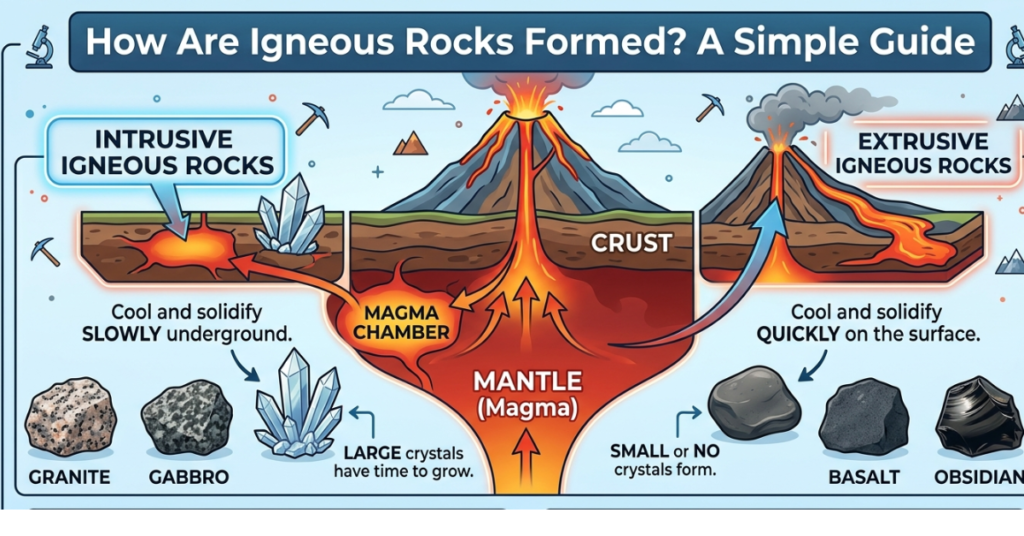
Igneous rocks are formed when magma or lava cools and hardens. This process happens either beneath Earth’s surface or after a volcanic eruption.
There are two main sources:
- Magma – molten rock beneath the Earth’s surface
- Lava – molten rock that reaches the surface
When either cools, it crystallizes into solid rock. That’s the simple answer to how are igneous rocks formed.
How Are Igneous Rocks Formed? Step-by-Step
Let’s walk through the formation process:
- Rock melts deep inside Earth due to extreme heat and pressure
- Magma forms beneath the crust
- Magma rises through cracks or weak spots
- It either:
- Cools underground, or
- Erupts as lava at the surface
- Cooling and crystallization occur
- Igneous rock forms
The cooling speed determines the rock’s texture and crystal size.
Types of Igneous Rocks
Understanding how are igneous rocks formed also means knowing the two major types.
1. Intrusive Igneous Rocks Plutonic
These form below Earth’s surface when magma cools slowly.
Characteristics:
- Large crystals
- Coarse-grained texture
- Slow cooling process
Examples:
- Granite
- Diorite
- Gabbro
Because cooling is slow, minerals have time to grow into visible crystals.
2. Extrusive Igneous Rocks Volcanic
These form above the surface when lava cools quickly.
Characteristics:
- Small or no crystals
- Fine-grained or glassy texture
- Rapid cooling
Examples:
- Basalt
- Obsidian
- Pumice
Quick cooling traps minerals before they can grow.
Why Cooling Speed Matters
Cooling rate directly affects rock texture:
| Cooling Speed | Crystal Size | Example |
| Slow | Large crystals | Granite |
| Fast | Small crystals | Basalt |
| Very fast | Glassy | Obsidian |
This is a key concept when learning how are igneous rocks formed.
Where Do Igneous Rocks Form?
Igneous rocks commonly form in:
- Volcanoes
- Mid-ocean ridges
- Subduction zones
- Hotspots (like Hawaii)
- Underground magma chambers
These geological settings help scientists understand Earth’s internal activity.
Common Examples of Igneous Rocks
Here are everyday examples you might recognize:
- Granite – countertops and buildings
- Basalt – ocean floor rock
- Obsidian – volcanic glass
- Pumice – lightweight rock that floats
- Andesite – common in volcanic regions
Importance of Igneous Rocks
Understanding how are igneous rocks formed matters because they:
- Reveal Earth’s geological history
- Form valuable minerals
- Create fertile soils after weathering
- Build mountains and islands
- Help scientists study plate tectonics
They are literally the foundation of Earth’s crust.
Key Characteristics of Igneous Rocks
- No fossils present
- Interlocking crystals
- Hard and durable
- Formed from molten material
- Found in volcanic regions
FAQs About How Are Igneous Rocks Formed
What is the main process of igneous rock formation?
Igneous rocks form when molten magma or lava cools and solidifies.
What are the two types of igneous rocks?
- Intrusive (formed underground)
- Extrusive (formed at the surface)
How long does it take for igneous rocks to form?
It can take days to millions of years, depending on cooling speed.
Which igneous rock cools the fastest?
Obsidian cools extremely quickly, forming volcanic glass.
Are igneous rocks the oldest rocks on Earth?
Yes, many of the oldest rocks discovered are igneous.
Conclusion
So, how are igneous rocks formed? Simply put, they begin as molten rock — either magma underground or lava at the surface — and solidify as they cool. The speed of cooling determines their texture, crystal size, and appearance.
From towering mountains to tiny mineral crystals, igneous rocks play a huge role in shaping our planet. If you’re interested in geology, understanding igneous rocks is a great place to start.