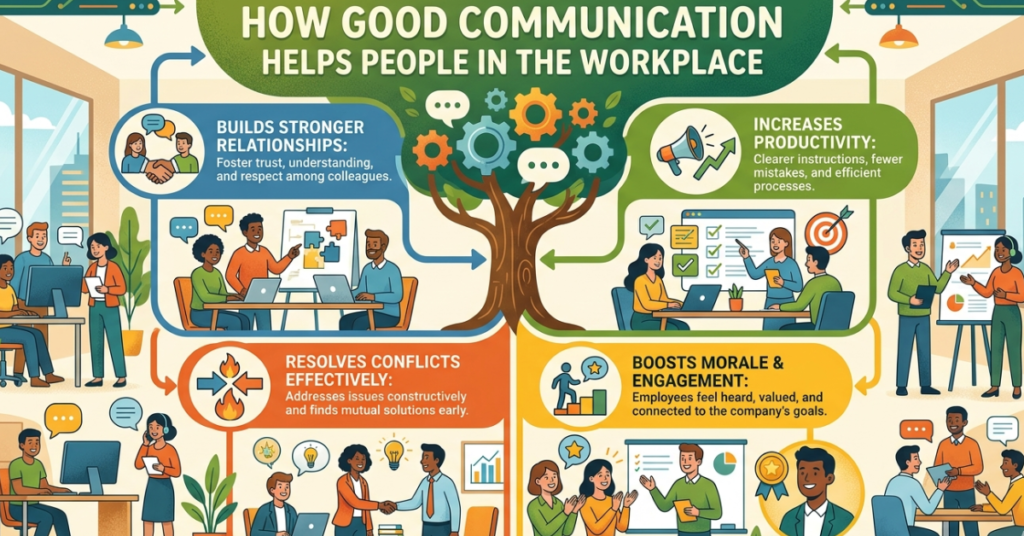

Ever noticed how some workplaces feel smooth, productive, and stress-free, while others are filled with confusion and delays? The difference often comes down to one thing: communication. When you describe how good communication helps people in a workplace, you quickly realize it impacts everything—from teamwork to employee satisfaction. Clear communication keeps everyone aligned, reduces misunderstandings, and creates a more positive environment where people actually enjoy working.
In this article, we’ll explore why effective workplace communication matters, how it benefits employees and employers, and practical ways to improve it.
What Is Good Communication in the Workplace?
Good workplace communication means sharing information clearly, listening actively, and ensuring everyone understands expectations. It involves:
- Clear instructions and feedback
- Open dialogue between teams
- Active listening
- Respectful tone and body language
- Transparent decision-making
When these elements are present, employees feel informed and confident in their roles.
How Good Communication Helps People in a Workplace
1. Improves Team Collaboration
One of the biggest ways to describe how good communication helps people in a workplace is through better teamwork. When employees communicate clearly:
- Tasks are divided efficiently
- Everyone understands their responsibilities
- Teams solve problems faster
- Ideas flow more freely
This reduces duplication of work and prevents confusion, making collaboration smoother.
2. Boosts Productivity and Efficiency
Good communication saves time. Employees don’t have to guess what needs to be done or redo tasks due to unclear instructions.
Benefits include:
- Faster decision-making
- Fewer mistakes
- Clear deadlines
- Better workflow coordination
When expectations are communicated effectively, productivity naturally increases.
3. Reduces Workplace Conflicts
Misunderstandings often lead to tension. Open communication helps resolve issues before they escalate.
Clear communication:
- Encourages respectful discussions
- Helps employees express concerns
- Prevents assumptions
- Builds trust among colleagues
A workplace with good communication experiences fewer unnecessary conflicts.
4. Increases Employee Engagement
Employees who feel heard are more engaged. When managers communicate openly:
- Workers feel valued
- Feedback is encouraged
- Morale improves
- Job satisfaction increases
Engaged employees are more motivated and committed to company goals.
5. Enhances Problem-Solving
Effective communication helps teams address challenges quickly. When employees share information freely:
- Problems are identified early
- Solutions are discussed collaboratively
- Innovation increases
- Decision-making improves
This creates a proactive workplace culture rather than a reactive one.
6. Builds Strong Workplace Relationships
Good communication strengthens professional relationships. Employees develop trust when they:
- Communicate honestly
- Listen to each other
- Share constructive feedback
- Respect different viewpoints
Strong relationships improve teamwork and workplace harmony.
7. Supports Better Leadership
Leaders who communicate well inspire confidence. Clear communication from management helps:
- Define goals
- Set expectations
- Provide guidance
- Offer recognition
Employees perform better when leadership is transparent and approachable.
Practical Tips to Improve Workplace Communication
Here are simple ways organizations can strengthen communication:
- Hold regular team meetings
- Encourage open feedback
- Use collaboration tools (Slack, Teams, etc.)
- Practice active listening
- Clarify expectations and deadlines
- Provide constructive feedback
- Promote a respectful communication culture
These small changes can make a big difference.
Benefits of Good Communication at a Glance
- Better teamwork
- Higher productivity
- Fewer misunderstandings
- Improved morale
- Stronger leadership
- Reduced conflicts
- Increased employee retention
FAQs
Why is communication important in the workplace?
Communication ensures everyone understands goals, tasks, and expectations. It reduces confusion and improves teamwork.
How does good communication improve productivity?
Clear instructions and feedback prevent mistakes and save time, allowing employees to focus on completing tasks efficiently.
What are examples of good workplace communication?
Examples include active listening, regular updates, constructive feedback, and transparent decision-making.
How can managers improve communication?
Managers can improve communication by holding meetings, encouraging feedback, and clearly explaining goals.
What happens when communication is poor in the workplace?
Poor communication leads to misunderstandings, conflicts, low morale, and decreased productivity.
Conclusion
When you describe how good communication helps people in a workplace, the benefits are clear. It improves teamwork, boosts productivity, reduces conflict, and creates a positive environment where employees thrive. Strong communication isn’t just a soft skill—it’s a critical factor for workplace success.
Organizations that prioritize clear and open communication build stronger teams, happier employees, and better results. Start improving communication today by encouraging open dialogue, listening actively, and setting clear expectations.