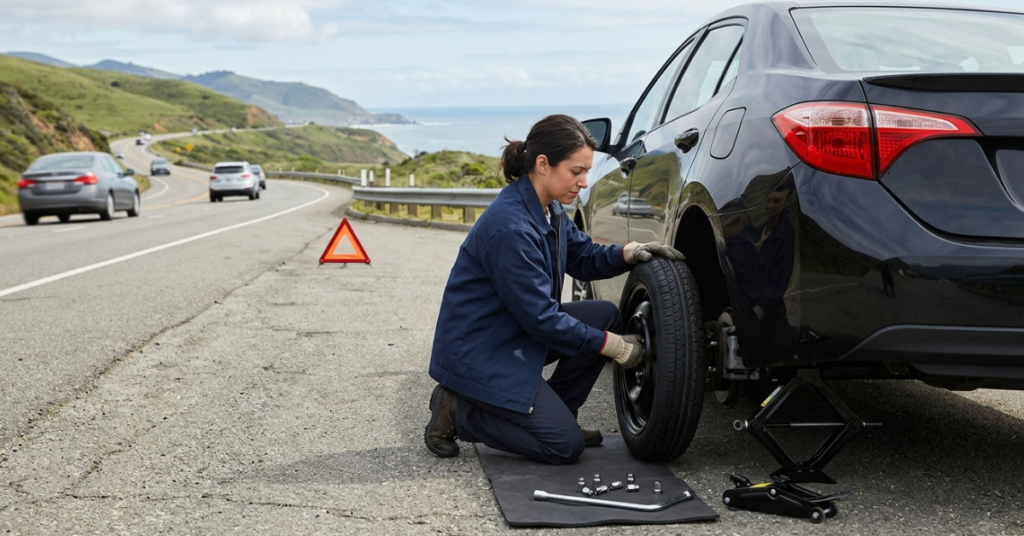

Getting a flat tire is never fun, especially when you’re on the road with no help nearby. Knowing how to change a tire can save you time, money, and stress. In this guide, we’ll walk you through changing a tire on your car safely, whether you have a jack or not, and cover everything from basic steps to dealing with rims.
Why Everyone Should Know How to Change a Tire
Being able to replace a flat tire is more than just a skill—it’s a safety essential. Here’s why:
- Safety first: Don’t wait for roadside assistance in dangerous locations.
- Cost-saving: Avoid towing fees or paid labor.
- Confidence: Gain peace of mind during emergencies.
- Versatility: Know how to handle tires on different vehicles.
Tools You’ll Need
Before starting, gather these essentials:
- Spare tire (properly inflated)
- Car jack and lug wrench
- Wheel wedges or blocks
- Gloves and safety gear
- Flashlight (for nighttime emergencies)
Tip: Some cars come with a compact jack or “donut” spare, so check your owner’s manual for specifics.
How to Change a Tire on a Car Step by Step
Follow these instructions to replace a tire safely and efficiently:
Step 1: Ensure Safety
- Pull over to a flat, stable surface away from traffic.
- Turn on hazard lights.
- Apply the parking brake and place wheel wedges.
Step 2: Loosen the Lug Nuts
- Use a lug wrench to loosen (not remove) the lug nuts while the tire is on the ground.
- Turn counterclockwise.
Step 3: Lift the Vehicle
- Position the jack under the vehicle’s recommended lift point.
- Raise the car until the tire is off the ground.
- Never put any part of your body under the car.
Step 4: Remove the Flat Tire
- Unscrew the lug nuts completely.
- Pull the tire straight off and set it aside safely.
Step 5: Mount the Spare Tire
- Align the spare with the lug bolts and slide it onto the hub.
- Hand-tighten the lug nuts first.
Step 6: Lower and Tighten
- Lower the car using the jack until the spare touches the ground.
- Tighten the lug nuts in a crisscross pattern to ensure even pressure.
- Fully lower the vehicle and remove the jack.
Step 7: Check Tire Pressure
- Confirm the spare tire is properly inflated before driving.
- Recheck lug nuts after a few miles.
How to Change a Tire on a Rim
Sometimes the tire itself needs replacement while still on the rim:
- Use tire irons to separate the tire from the rim.
- Be cautious—this can require extra strength or specialized tools.
- For complex rims, consider a professional tire shop.
How to Change a Tire Without a Jack
If you don’t have a jack:
- Look for alternative lifting methods like a built-in scissor jack or a portable car lift.
- Use ramps if available.
- Some emergency kits include inflatable lifting bags for small adjustments.
- If unsafe, call roadside assistance instead of risking injury.
Common Mistakes to Avoid
- Forgetting to secure the car or apply wheel wedges
- Over-tightening or under-tightening lug nuts
- Attempting to change a tire on uneven ground
- Using the wrong jack or lifting point
FAQs About Changing a Tire
Q1: How long does it take to change a tire?
A: With practice, 15–20 minutes is typical for most cars.
Q2: Can I drive on a spare tire?
A: Most “donut” spares are limited to 50 miles and 50 mph.
Q3: Do all cars have a spare tire?
A: Newer vehicles sometimes come with repair kits instead of full spares—check your manual.
Q4: Can I change a tire without tools?
A: It’s difficult and unsafe; proper tools like a jack and lug wrench are essential.
Q5: How do I remove a stuck lug nut?
A: Use penetrating oil or a breaker bar for extra leverage.
Conclusion
Knowing how to change a tire is an essential skill for any driver. Whether it’s a standard tire, a rim issue, or an emergency without a jack, following these steps keeps you safe and confident on the road. Practice this process, keep tools handy, and you’ll be ready for any tire emergency.