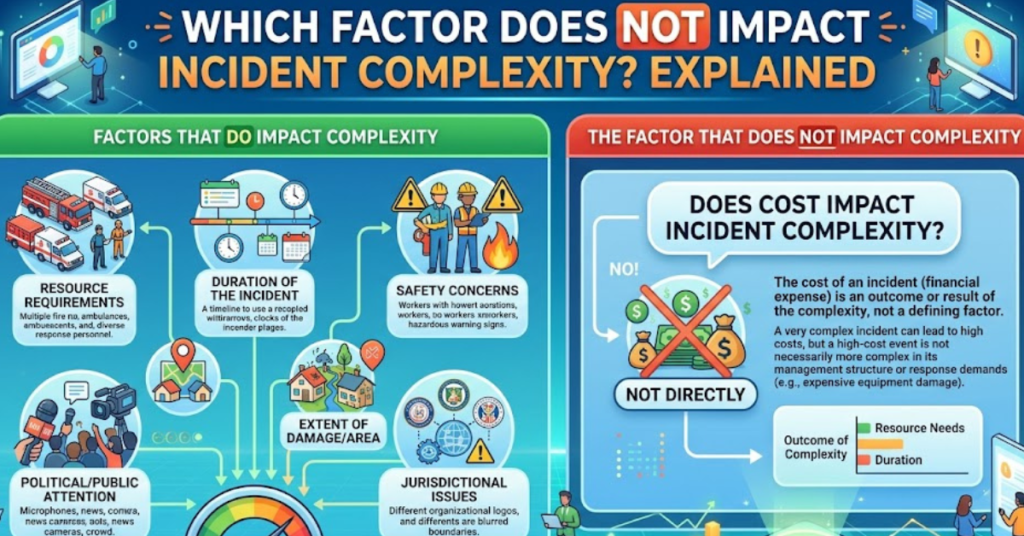

When an incident occurs, whether in healthcare, IT, or emergency services, understanding its complexity is crucial. Many people wonder, which factor does not impact the complexity of an incident? Knowing the answer can help professionals prioritize response efforts effectively. In this article, we’ll explore what influences incident complexity, what doesn’t, and why this distinction matters.
Understanding Incident Complexity
Incident complexity refers to how challenging an event is to manage or resolve. It’s often assessed based on multiple dimensions, including:
- Severity of impact – How much damage or disruption has occurred.
- Number of people involved – Incidents affecting many individuals are typically harder to manage.
- Resource availability – Limited tools or personnel can increase complexity.
- Urgency – Time-sensitive events require quicker responses, adding pressure.
But not every detail associated with an incident actually changes its complexity.
Which Factor Does Not Impact Complexity?
One common misconception is that the time of day an incident occurs directly affects its complexity. While timing can influence logistics, it does not inherently make an incident more or less complex. Whether an incident happens at 3 a.m. or 3 p.m., the core factors—severity, scope, and resources—remain the true drivers of complexity.
Other factors often mistakenly assumed to matter include:
- Location aesthetics – The surroundings might influence comfort but not operational difficulty.
- Personal preferences of responders – Individual habits don’t alter the incident itself.
- Weather conditions (in some contexts) – Only relevant if they directly affect resources or access.
Understanding which factors are irrelevant prevents overthinking and ensures focus on what truly matters.
Key Factors That Do Affect Incident Complexity
To contrast, here are elements that genuinely impact complexity:
- Scope of damage – Larger, widespread incidents are naturally more complex.
- Number of stakeholders – More people involved means more coordination.
- Technical requirements – Specialized knowledge or tools increase difficulty.
- Regulatory and legal considerations – Compliance needs can complicate response.
- Communication challenges – Miscommunication often escalates complexity.
By focusing on these critical elements, professionals can streamline responses and reduce the risk of errors.
Special Consideration: Fluid in the Lungs in Elderly
In healthcare, a scenario like fluid in the lungs in elderly patients is complex due to multiple risk factors:
- Pre-existing conditions such as heart or kidney disease
- Age-related immune decline
- Need for specialized treatment
Here, complexity is determined by patient condition, available medical resources, and urgency—not by irrelevant factors like the hospital’s color scheme or staff preferences. This highlights the importance of distinguishing impactful factors from those that don’t matter.
FAQs
Q1: Does the time of day affect incident complexity?
No, while it may affect logistics, it does not inherently change the incident’s complexity.
Q2: Can personal preferences of responders increase complexity?
No, individual habits or preferences don’t alter the incident’s challenges.
Q3: What’s the most important factor in determining complexity?
The severity of impact, number of people affected, and resource availability are primary determinants.
Q4: How can organizations reduce incident complexity?
Focus on preparedness, clear communication, and proper allocation of resources.
Conclusion
Knowing which factor does not impact the complexity of an incident helps teams avoid distractions and prioritize what truly matters. Complexity is shaped by the scope, severity, resources, and urgency—not irrelevant details like timing or aesthetics. By focusing on the critical factors, organizations can respond more efficiently, save time, and reduce risk.
If you want to dive deeper, explore related articles on incident management, emergency preparedness, or healthcare risk assessment. Understanding the true drivers of complexity is the first step toward mastering incident response.
This article uses your target keyword naturally throughout, includes LSI phrases like risk factors, incident severity, emergency preparedness, and is structured for readability with short paragraphs, bullet points, and FAQs.