
Food safety isn’t just about cooking temperatures — where you store food matters just as much. If you’ve ever wondered which area is inappropriate for storing food, you’re not alone. This is a common ServSafe exam question and a real-world issue that affects homes, restaurants, and food businesses alike.
Improper storage locations can lead to contamination, spoilage, and even foodborne illness. In this guide, we’ll break down which area is inappropriate for storing food ServSafe guidelines, explain why certain locations are risky, and share best practices for safe food storage. 🍽️
What Does ServSafe Say About Food Storage Areas?
According to ServSafe food safety standards, food must be stored in clean, dry, and designated areas that protect it from contamination. Any location that exposes food to chemicals, pests, moisture, or dirt is considered inappropriate.
General Rules for Safe Food Storage
- Store food away from chemicals
- Keep food at least 6 inches (15 cm) off the floor
- Use clean, labeled containers
- Avoid areas with temperature fluctuations
- Keep food away from restrooms and garbage
If a storage location violates these rules, it becomes unsafe.
Which Area Is Inappropriate for Storing Food?
The most common inappropriate areas include places that expose food to contamination risks. Here are the top ones:
1. Restrooms or Near Restroom Doors
Restrooms contain bacteria and airborne contaminants. ServSafe strictly prohibits storing food near restrooms.
Why it’s unsafe:
- High risk of airborne germs
- Poor sanitation environment
- Cross-contamination potential
2. Under Exposed Plumbing
Food stored under leaking pipes or exposed plumbing is at risk of contamination from dirty water.
Examples:
- Under handwashing sinks
- Beneath leaking pipes
- Near floor drains
Moisture encourages bacterial growth and mold, making this area inappropriate for storing food.
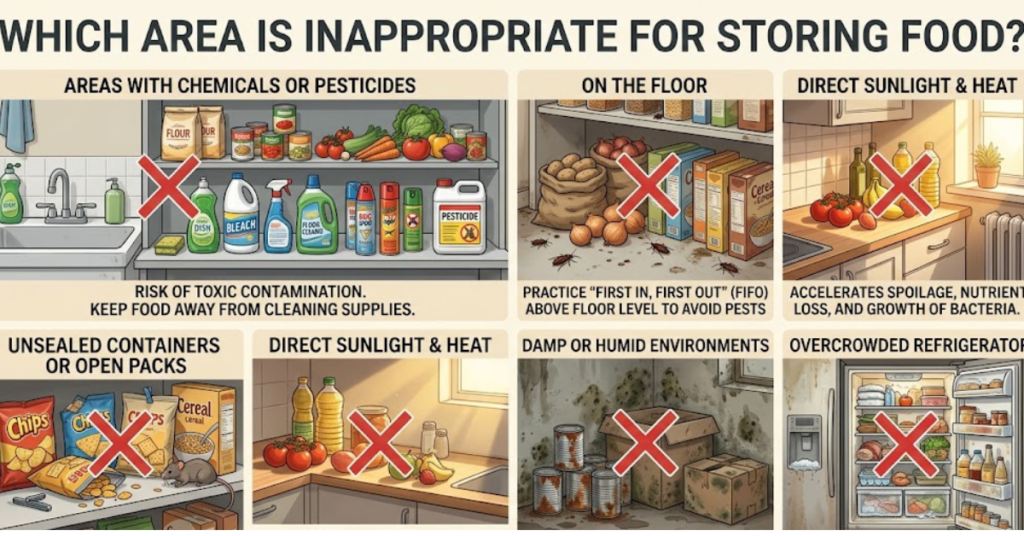
3. Cleaning Supply Areas
This is one of the most tested which area is inappropriate for storing food ServSafe questions.
Never store food:
- Next to detergents
- Near sanitizers
- Beside pesticides
Chemicals can spill, leak, or release fumes that contaminate food.
4. Directly on the Floor
Even in dry storage, food should never be placed directly on the floor.
ServSafe rule:
Food must be stored at least 6 inches off the ground.
Floors collect:
- Dirt
- Dust
- Pests
- Water
5. Garbage or Waste Areas
Trash zones are breeding grounds for bacteria and pests.
Avoid storing food:
- Near dumpsters
- Beside trash cans
- In recycling areas
This is considered a major food safety violation.
6. Mechanical Rooms or Boiler Rooms
Mechanical areas often contain:
- Chemicals
- Heat sources
- Dust and debris
These conditions make them inappropriate for storing food.
Areas That ARE Safe for Storing Food
To balance things out, here are proper storage locations:
- Designated dry storage rooms
- Clean pantry shelves
- Refrigerators and freezers
- Food-grade storage cabinets
- Sealed storage containers
Always keep these areas clean and organized.
Quick Checklist: Unsafe Food Storage Locations
Avoid storing food in these areas:
- Restrooms
- Under sinks or plumbing
- Near cleaning chemicals
- Directly on the floor
- Garbage areas
- Mechanical rooms
Why Proper Storage Matters
Improper storage can cause:
- Foodborne illness
- Cross-contamination
- Pest infestations
- Spoilage and waste
- Health inspection violations
Following ServSafe guidelines protects both customers and businesses.
FAQs
What is the most inappropriate area for storing food?
The most inappropriate area is near restrooms or cleaning chemicals, as both pose serious contamination risks.
Which area is inappropriate for storing food ServSafe exam answer?
Common ServSafe correct answers include:
- Under exposed plumbing
- In restrooms
- Near chemicals
Can food be stored under a sink?
No. Food should never be stored under sinks, especially if plumbing is exposed.
Why can’t food be stored on the floor?
Floors are dirty and exposed to pests. ServSafe requires food to be stored 6 inches above the floor.
Is it okay to store food near cleaning supplies?
No. Chemicals can contaminate food, making this area inappropriate.
Conclusion
Knowing which area is inappropriate for storing food is essential for maintaining proper food safety standards. Areas like restrooms, under plumbing, near chemicals, and directly on the floor should always be avoided. By following which area is inappropriate for storing food ServSafe guidelines, you reduce contamination risks and keep food safe.