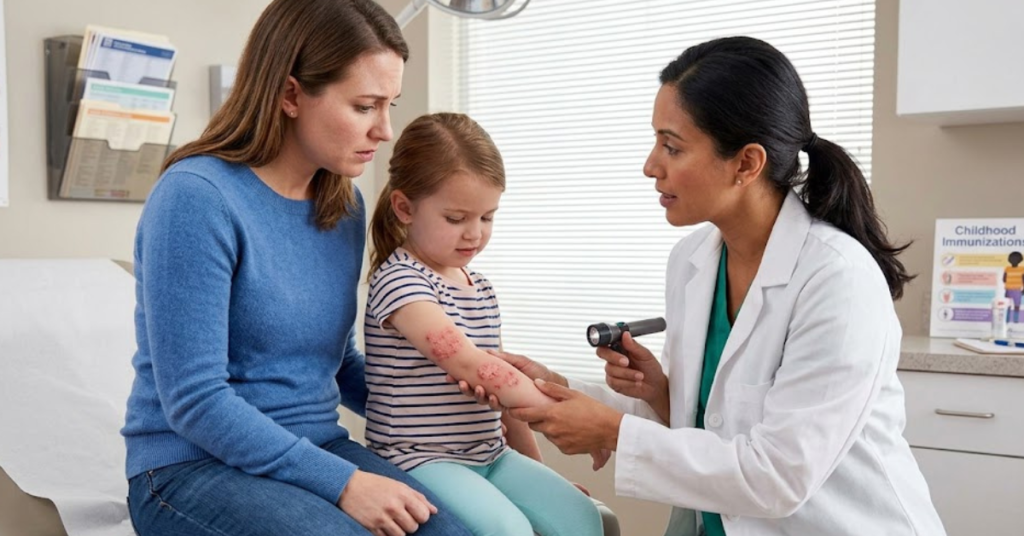

A rash on your child’s skin can appear suddenly and cause instant concern. Some rashes are harmless and disappear quickly, while others may signal an infection or allergic reaction. Knowing when to worry about rash on child can help you decide whether to monitor at home or seek medical care.
This guide breaks down the warning signs, common causes, and practical steps you can take — all in simple, parent-friendly language.
What Is a Rash in Children?
A rash is any noticeable change in your child’s skin, such as:
- Redness
- Bumps or spots
- Dry patches
- Blisters
- Swelling
- Itching
Many childhood rashes are mild and linked to heat, allergies, or viral infections. But certain symptoms require immediate attention.
When to Worry About Rash on Child
Here are key warning signs that mean you should contact a doctor:
1. Rash With Fever
If your child has:
- Fever above 38°C (100.4°F)
- Rash that spreads quickly
- Lethargy or unusual sleepiness
This may indicate a viral or bacterial infection such as measles, scarlet fever, or meningitis.
2. Purple or Bruise-Like Spots
Non-blanching rashes (don’t fade when pressed) may signal a serious condition like meningococcal infection. This is a medical emergency.
3. Difficulty Breathing or Swelling
If a rash appears with:
- Swollen lips or face
- Wheezing
- Trouble breathing
It could be an allergic reaction or anaphylaxis. Seek emergency care immediately.
4. Rash That Spreads Rapidly
A fast-spreading rash within hours may indicate infection or allergic reaction and needs urgent evaluation.
5. Blisters or Peeling Skin
This may suggest:
- Severe allergic reaction
- Viral infections like chickenpox
- Rare but serious conditions (e.g., Stevens-Johnson syndrome)
6. Rash With Severe Pain
Painful rashes are less common and may indicate bacterial infections like cellulitis.
7. Rash in Newborns Under 3 Months
Always consult a doctor if a newborn develops a rash, especially with fever.
Common Harmless Rashes in Children
Not every rash is serious. Many are mild and go away on their own:
- Heat rash (prickly heat)
- Diaper rash
- Mild eczema
- Viral rash without other symptoms
- Contact dermatitis (soap, detergent)
These typically improve within a few days.
Symptoms That Usually Mean It’s Less Serious
You can monitor at home if:
- Child is active and playful
- No fever
- Rash is mild and not spreading
- No breathing issues
- Rash improves within 24–48 hours
Still, trust your instincts — you know your child best.
What Causes Rashes in Children?
Understanding causes helps determine when to worry about rash on child:
Viral Infections
- Roseola
- Fifth disease
- Hand, foot, and mouth disease
Allergic Reactions
- Foods
- Medications
- Insect bites
Skin Conditions
- Eczema
- Psoriasis
- Hives
Bacterial Infections
- Impetigo
- Scarlet fever
Environmental Triggers
- Heat
- Detergents
- New skincare products
What You Can Do at Home
If the rash appears mild:
- Keep the skin clean and dry
- Avoid new soaps or lotions
- Use fragrance-free moisturizer
- Dress your child in loose cotton clothing
- Prevent scratching (trim nails)
Do NOT use medicated creams unless advised by a doctor.
When to Seek Immediate Medical Help
Call emergency services if your child has:
- Rash with breathing difficulty
- Rash with stiff neck
- Rash with confusion
- Purple spots that don’t fade
- Rash with high fever and vomiting
These symptoms may indicate serious illness.
FAQs About When to Worry About Rash on Child
1. How long should I wait before seeing a doctor?
If the rash lasts more than 2–3 days or worsens, consult a pediatrician.
2. Should I worry about rash without fever?
Usually not, but monitor for spreading, swelling, or discomfort.
3. Can teething cause rashes?
Teething may cause mild drool rash around the mouth, which is harmless.
4. Is a rash always an allergy?
No. Many rashes are caused by viruses, heat, or irritation.
5. When is a rash an emergency?
When paired with breathing difficulty, fever, or purple spots.
Conclusion
Knowing when to worry about rash on child can reduce anxiety and help you act quickly when needed. Most rashes are harmless, but warning signs like fever, breathing difficulty, or rapidly spreading spots should never be ignored.
Keep an eye on symptoms, trust your instincts, and don’t hesitate to consult a healthcare professional when something feels off. Early attention can make all the difference in keeping your child safe and comfortable.