
Experiencing pain after a tooth extraction is common, but nothing beats the sharp discomfort of a dry socket. Knowing how to prevent dry socket can save you from prolonged pain, infection, and extra dental visits. In this guide, we’ll cover practical steps for protecting the extraction site, including specific tips for wisdom teeth removal, sleeping, and even smoking.
What Is Dry Socket and Why It Happens
A dry socket occurs when the blood clot at the extraction site becomes dislodged or dissolves too early, exposing underlying bone and nerves. This can lead to intense pain and delayed healing. Common causes include:
- Smoking or using tobacco
- Drinking through a straw
- Poor oral hygiene
- Aggressive rinsing or spitting
Understanding these factors helps you take proactive steps to avoid complications.
General Tips: How to Prevent Dry Socket
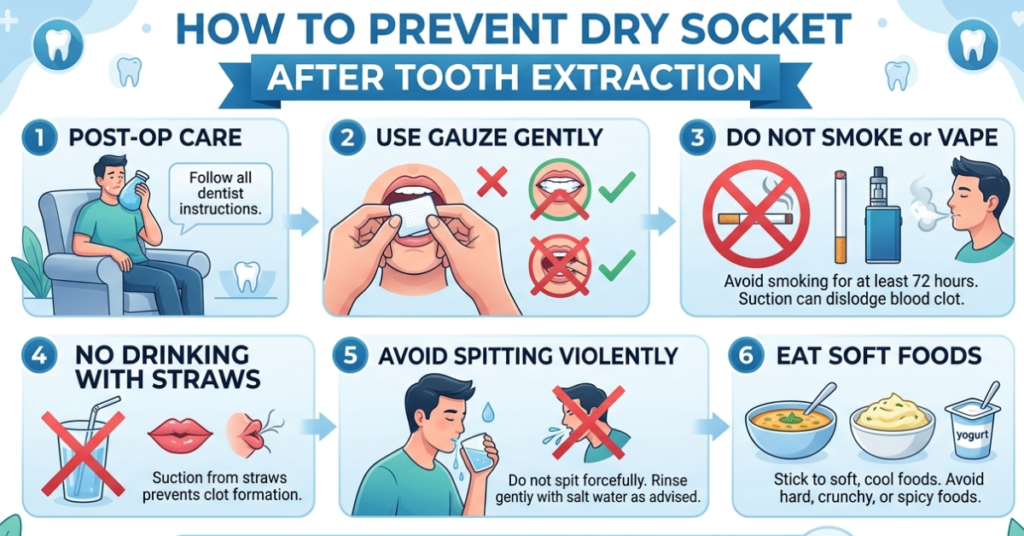
Here are the foundational strategies to protect your healing socket:
- Follow your dentist’s instructions carefully – your dentist knows the best practices for your extraction.
- Avoid smoking and tobacco – nicotine reduces blood flow, increasing dry socket risk.
- Keep your mouth clean but gentle – rinse with salt water or an antiseptic solution as recommended.
- Stick to soft foods – avoid crunchy or sticky foods that might disturb the clot.
- Hydrate safely – sip water without using a straw.
Pro tip: Be patient—healing takes time, usually about 7–10 days for most extractions.
How to Prevent Dry Socket After Wisdom Teeth Removal
Wisdom teeth are notorious for complications. To minimize risk:
- Use ice packs in the first 24 hours to reduce swelling.
- Sleep with your head elevated to prevent blood clot dislodgement.
- Avoid strenuous exercise for at least 48 hours.
- Take prescribed medications as directed by your dentist or oral surgeon.
Following these tips can drastically reduce the likelihood of a painful dry socket.
How to Prevent Dry Socket While Sleeping
Sleeping incorrectly can sometimes dislodge the healing clot. To avoid this:
- Sleep with your head slightly elevated using extra pillows.
- Avoid rolling onto the extraction side.
- Stick to your dentist’s instructions for nighttime oral care, such as gentle rinsing before bed.
How to Prevent Dry Socket While Smoking
Smoking is a major risk factor. If quitting isn’t immediately possible:
- Avoid smoking for at least 72 hours after extraction.
- If you must, try cold-tobacco alternatives or nicotine patches (with dentist approval).
- Rinse gently with salt water afterward to reduce infection risk.
Common Mistakes That Increase Dry Socket Risk
- Using straws for drinks
- Eating hard or sticky foods too soon
- Neglecting oral hygiene
- Aggressively rinsing or spitting
Avoiding these mistakes helps keep your healing smooth and pain-free.
FAQs About Dry Socket Prevention
Q1: How long after extraction is dry socket most likely?
A: Dry socket typically develops 2–5 days after tooth extraction, often when the clot is disturbed.
Q2: Can dry socket happen after wisdom teeth removal only?
A: No, it can occur after any tooth extraction, but wisdom teeth are more prone due to their position and difficulty of removal.
Q3: Is there a way to prevent dry socket while sleeping?
A: Yes! Sleep with your head elevated and avoid lying directly on the extraction site.
Q4: Can I smoke after tooth extraction?
A: It’s best to avoid smoking for at least 72 hours, as it greatly increases dry socket risk.
Q5: How can I tell if I have a dry socket?
A: Severe pain radiating to your ear, bad taste, or exposed bone are common signs. Contact your dentist immediately.
Conclusion
Knowing how to prevent dry socket after tooth extraction is crucial for a smooth recovery. By following dentist-recommended care, avoiding smoking, and protecting the extraction site while sleeping, you can significantly reduce discomfort and complications. Take these tips seriously, and your healing process will be much easier.