
There’s something timeless about folding a sheet of paper into a flying machine. Whether you’re bored at home, teaching kids, or just chasing the perfect glide, learning how to make a paper airplane is both fun and surprisingly technical. With the right folds and a few simple tweaks, you can build a plane that flies far, fast, and straight.
In this guide, you’ll discover beginner-friendly methods, advanced paper airplane jet designs, and tips for improving distance and accuracy. Let’s get folding.
Why Paper Airplanes Are More Than Just Fun
Paper airplanes combine creativity with basic aerodynamics. A well-made plane balances lift, weight, thrust, and drag. That’s why even small adjustments can change how far your plane travels.
Benefits of making paper airplanes:
- Encourages creativity and problem-solving
- Teaches basic physics concepts
- Great hands-on activity for kids
- Quick and easy entertainment anywhere
How to Make a Paper Airplane Easy Beginner Method
If you’re new, start with a simple design. This how to make a paper airplane easy method takes less than a minute.
Step-by-Step Instructions
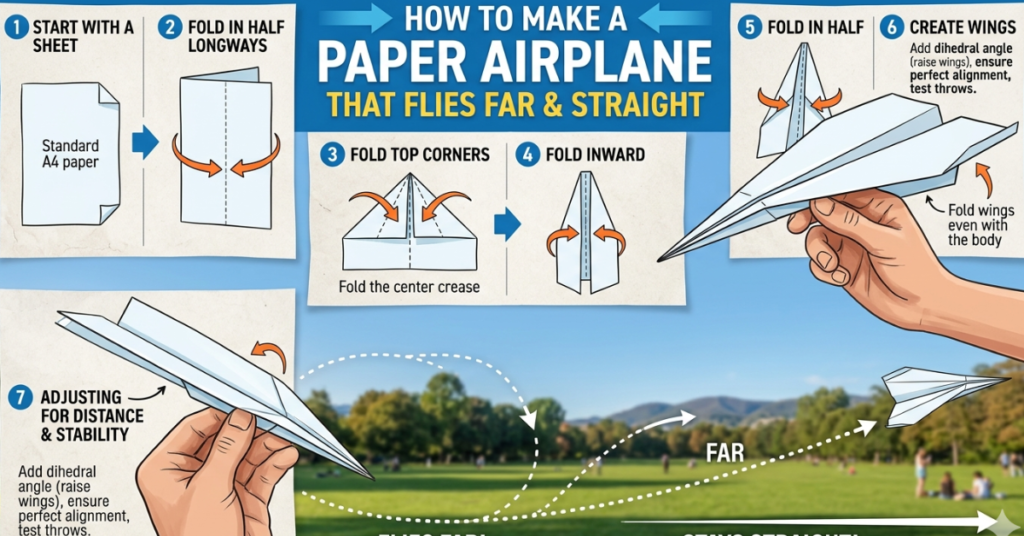
- Take a standard A4 or letter-size sheet.
- Fold the paper in half lengthwise.
- Unfold and fold the top corners to the center crease.
- Fold the angled edges again to the center.
- Fold the plane in half along the original crease.
- Fold wings down evenly on both sides.
That’s it! You now have a basic glider that works well for beginners and kids.
How to Make a Paper Airplane That Flies Far and Straight
Distance depends on symmetry and tight folds. To build a plane that performs better:
- Make sharp, clean folds
- Keep wings even on both sides
- Add slight wing tips (bend up slightly)
- Throw gently, not forcefully
These adjustments help when learning how to make a paper airplane that flies far and straight. Smooth airflow improves stability and distance.
How to Make a Paper Airplane Jet Fast Design
Want speed? Try a jet-style plane. This how to make a paper airplane jet design is narrow and aerodynamic.
Jet Plane Steps
- Fold paper in half lengthwise.
- Fold top corners to the center.
- Fold edges inward again to create a sharper nose.
- Fold the plane in half.
- Create narrow wings by folding each side down.
This design cuts through air quickly and is perfect if you’re looking for fast how to make a paper airplane techniques.
How to Make a Paper Airplane That Goes Far
If distance is your goal, focus on glider-style planes:
Tips for longer flights:
- Use slightly wider wings
- Keep nose weight balanced
- Throw at a slight upward angle
- Use thicker paper for stability
These adjustments help when learning how to make a paper airplane that goes far without sacrificing control.
How to Make a Paper Airplane for Kids
Kids need something simple, durable, and fun. Try this easy version:
- Fold paper in half
- Fold top corners to the middle
- Fold in half again
- Fold wings down
This how to make a paper airplane for kids approach keeps things simple and frustration-free.
How to Make a Paper Airplane Easy and Fast
Short on time? This quick method works:
- Fold in half
- Fold corners in
- Fold wings down
- Toss gently
You’ll have a working plane in under 30 seconds. Perfect for classrooms or quick fun.
Common Mistakes to Avoid
- Uneven wings cause spinning
- Loose folds reduce distance
- Throwing too hard makes the plane dive
- Using very thin paper reduces stability
Fixing these improves performance immediately.
FAQs About Paper Airplanes
Q1: What paper works best?
Standard printer paper is ideal. Heavier paper flies more steadily, lighter paper glides longer.
Q2: How do I make my paper airplanes fly farther?
Keep folds tight, wings symmetrical, and throw gently at a slight upward angle.
Q3: Which design is fastest?
Jet-style narrow planes usually travel the fastest.
Q4: Are paper airplanes good for kids?
Yes! They’re safe, educational, and encourage creativity.
Q5: Why does my plane keep turning?
One wing may be uneven. Adjust both sides until balanced.
Conclusion
Learning how to make a paper airplane is simple, fun, and surprisingly rewarding. Whether you’re building an easy model, a fast jet, or experimenting with a design that flies far and straight, small adjustments make a big difference. Start with basic folds, experiment with different styles, and soon you’ll have a plane that glides perfectly across the room.