
Finding the perfect pillow isn’t just about picking the fluffiest one at the store. Your pillow plays a huge role in your sleep quality, neck alignment, and even overall health. Whether you wake up with a stiff neck or toss and turn all night, knowing how to choose a pillow correctly can transform your sleep experience. In this guide, we’ll break down everything you need to know—from pillow types to sleeping positions—so you can make a choice that suits you perfectly.
Why Choosing the Right Pillow Matters
Your pillow isn’t just a cushion for your head—it supports your neck, spine, and shoulders while you sleep. The wrong pillow can lead to:
- Neck and shoulder pain
- Poor posture over time
- Tossing and turning, reducing sleep quality
- Morning headaches
By understanding how to choose a pillow that matches your sleeping style and body type, you can prevent these issues and wake up feeling refreshed.
Factors to Consider When Choosing a Pillow
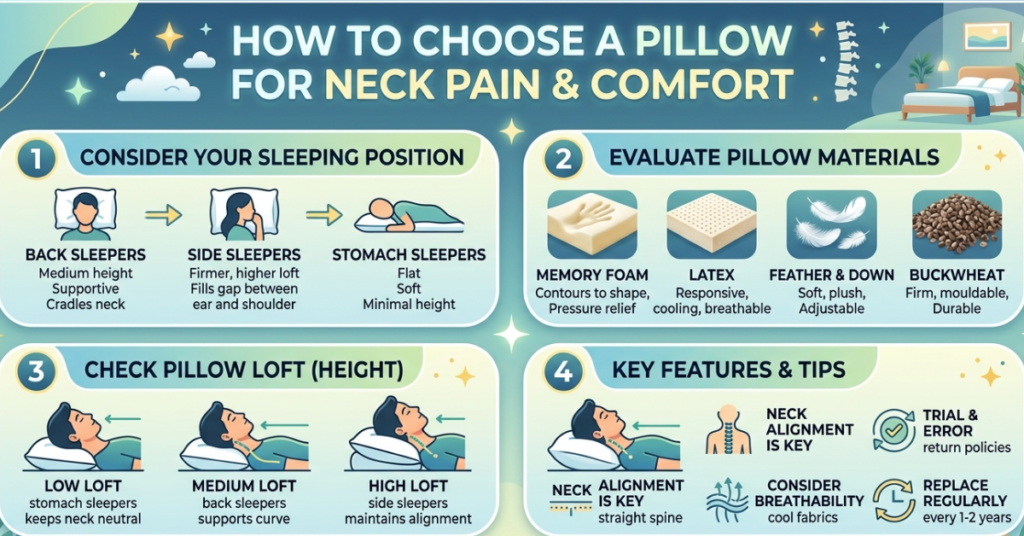
1. Sleeping Position
Your sleep position is key in determining the type of pillow you need:
- Back sleepers: Medium-loft pillows that support the natural curve of your neck
- Side sleepers: Firmer, thicker pillows to fill the space between shoulder and head
- Stomach sleepers: Soft, thin pillows to avoid neck strain
Tip: Many side sleepers benefit from a contoured pillow designed specifically for lateral support.
2. Pillow Fill Material
The material inside your pillow affects support, comfort, and durability:
- Memory foam: Molds to your head and neck; excellent for neck pain
- Down or feather: Soft and plush; may need frequent fluffing
- Latex: Firm and hypoallergenic; offers long-lasting support
- Polyester: Affordable and lightweight, but less durable
3. Loft and Firmness
Loft refers to pillow thickness, and firmness refers to how soft or hard it feels. These should match your body size and sleeping position:
| Sleeping Position | Recommended Loft | Firmness |
| Side sleeper | High (4–6″) | Firm |
| Back sleeper | Medium (3–5″) | Medium |
| Stomach sleeper | Low (2–3″) | Soft |
4. Pillow Size
Standard, queen, or king—the size matters if you move a lot in your sleep or share a bed. A pillow should support your head without forcing your neck out of alignment.
5. Special Considerations
- Neck pain: Look for cervical pillows or memory foam options
- Allergies: Opt for hypoallergenic or natural-fill pillows
- Hot sleepers: Consider cooling gel, breathable materials, or bamboo covers
How to Choose a Pillow for Side Sleepers
Side sleepers often experience shoulder and neck strain, so choosing the right pillow is crucial. Here’s a step-by-step approach:
- Measure the distance from your shoulder to your ear while lying down.
- Choose a pillow that fills that gap to keep your spine aligned.
- Select a firmer material like memory foam or latex for consistent support.
- Consider a contoured or ergonomic pillow to reduce pressure points.
Tip: Using a body pillow can provide extra support for your hips and shoulders.
How to Choose a Pillow for Neck Pain
If neck pain wakes you up in the morning, these tips will help:
- Use a pillow that maintains the natural curve of your neck.
- Avoid overly soft pillows that let your head sink too low.
- Consider a cervical or orthopedic pillow if standard pillows fail to provide relief.
- Test your pillow for a few nights; sometimes, slight adjustments in loft or firmness make a big difference.
FAQs About Choosing the Right Pillow
Q1: How often should I replace my pillow?
Most pillows last 1–3 years depending on material. Memory foam and latex usually last longer.
Q2: Can a pillow prevent neck pain completely?
While the right pillow helps, posture, mattress quality, and sleeping habits also affect neck health.
Q3: What pillow is best for side sleepers?
Medium-firm to firm pillows with higher lofts (4–6 inches) work best for side sleepers.
Q4: Is memory foam good for everyone?
Memory foam is excellent for support and alignment, especially for neck pain, but some sleepers prefer softer, breathable materials.
Q5: Can I use two pillows?
Yes, but avoid stacking soft pillows as it can misalign your neck. Consider one supportive pillow and one for comfort.
Conclusion
Choosing the right pillow isn’t just a luxury—it’s an investment in your sleep and health. By considering your sleeping position, pillow material, loft, and firmness, you can dramatically improve comfort and reduce neck pain. Whether you’re a side sleeper, back sleeper, or battling chronic neck discomfort, the right pillow can make all the difference. Take the time to explore options, test different pillows, and prioritize your sleep quality—you deserve it.