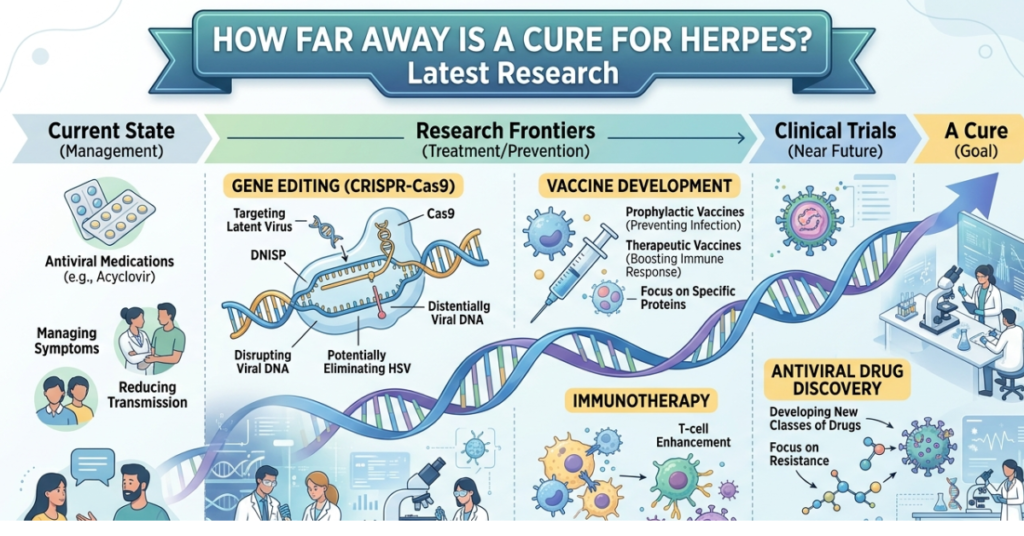

For millions of people worldwide, herpes is more than just a medical condition — it’s a lingering question about the future. How far away is a cure for herpes? Scientists have been working for decades to answer this, and while we’re not there yet, the progress is more promising than ever. From gene-editing breakthroughs to vaccine trials, research is accelerating, giving hope that a long-term solution may be closer than many think.
This article breaks down the latest developments, realistic timelines, and what “cure” actually means in medical terms.
Understanding Herpes: Why Is It So Hard to Cure?
Before exploring timelines, it helps to understand why herpes is challenging to eliminate. Herpes simplex virus (HSV-1 and HSV-2) hides in nerve cells, where it can remain dormant for years. This makes it difficult for medications to completely remove the virus from the body.
Key challenges include:
- The virus stays latent in nerve ganglia
- It can reactivate unpredictably
- Current antivirals suppress symptoms but don’t eradicate the virus
- Immune system detection is limited once latency occurs
Because of these factors, scientists are working toward both functional cures and sterilizing cures.
What Would a Herpes Cure Look Like?
When discussing how far away a cure might be, it’s important to know there are two types:
Functional Cure
- Stops outbreaks permanently
- Prevents transmission
- Virus remains in the body but inactive
Sterilizing Cure
- Completely removes the virus
- No chance of reactivation
- Considered the ultimate goal
Most researchers believe a functional cure may arrive first.
Current Treatments: How Close Are We Already?
While not a cure, today’s treatments are effective at managing symptoms:
- Antivirals like acyclovir, valacyclovir, and famciclovir
- Daily suppressive therapy reduces outbreaks
- Transmission risk can drop by up to 50% with medication
- Lifestyle changes may help reduce flare-ups
These options show that science already controls the virus — the next step is eliminating it.
Breakthrough Research: Promising Developments
1. Gene Editing CRISPR and Similar Technologies
Researchers are exploring gene-editing tools that target HSV DNA directly. Early lab studies have shown the ability to remove large portions of the virus in infected cells.
Why this matters:
- Targets the virus at its source
- Could potentially lead to a sterilizing cure
- Still in preclinical stages
2. Therapeutic Vaccines
Unlike preventive vaccines, therapeutic vaccines aim to help people already infected.
Some goals:
- Reduce outbreaks
- Lower viral shedding
- Possibly stop transmission
Several candidates are currently in clinical trials.
3. mRNA Technology
After COVID-19, mRNA platforms gained attention. Scientists are now using similar approaches for HSV vaccines.
Potential benefits:
- Faster development cycles
- Strong immune responses
- Adaptable for HSV-1 and HSV-2
Realistic Timeline: How Far Away Is a Cure?
Experts tend to give cautious estimates. Based on current research:
- Short term (3–5 years): Improved treatments and therapeutic vaccines
- Medium term (5–10 years): Possible functional cure candidates
- Long term (10+ years): Potential sterilizing cure
These timelines depend on clinical trials, safety approvals, and funding.
What Experts Are Saying
Researchers from major institutions emphasize cautious optimism. Progress is accelerating due to:
- Increased funding
- New gene-editing tools
- Better understanding of HSV latency
- Global collaboration
Many scientists believe we are closer now than at any point in history.
Can Lifestyle and Prevention Help in the Meantime?
While waiting for a cure, people can reduce outbreaks by:
- Managing stress
- Getting enough sleep
- Maintaining a strong immune system
- Avoiding known triggers
- Using antiviral medication when prescribed
These steps won’t eliminate the virus but can improve quality of life.
FAQs
Is there currently a cure for herpes?
No, there is no approved cure yet. Existing treatments focus on managing symptoms and reducing transmission.
Will a herpes vaccine be available soon?
Several vaccines are in development. Some experts believe a therapeutic vaccine could appear within the next decade.
Can gene editing cure herpes?
Early studies are promising, but gene-editing treatments are still being tested and not yet available to the public.
Is HSV-1 easier to cure than HSV-2?
Not necessarily. Both types behave similarly in terms of latency, making them equally challenging to eliminate.
Should I wait for a cure instead of treatment?
No. Current treatments are effective and recommended for managing symptoms and reducing spread.
Conclusion
So, how far away is a cure for herpes? While there’s no exact date, scientific progress suggests meaningful breakthroughs could happen within the next decade. Functional cures may arrive first, followed by more advanced solutions. Until then, modern treatments and preventive strategies offer strong symptom control and improved quality of life.
If you want to stay informed, consider exploring related topics like antiviral therapies, immune support, or ongoing vaccine trials. Staying updated can help you make confident, informed decisions.