
Have you ever wondered how a person with bipolar thinks? The answer isn’t simple, because bipolar disorder affects mood, energy, and perception in ways that can shift dramatically over time. Someone living with bipolar disorder may experience intense highs (mania or hypomania) and deep lows (depression), and these changes influence their thought patterns, decisions, and relationships.
In this guide, we’ll break down thoughts how a person with bipolar thinks, what happens during different mood phases, and how a person with bipolar thinks in relationships. Understanding these patterns can help you communicate better, build empathy, and support someone more effectively.
What Is Bipolar Disorder? Quick Overview
Bipolar disorder is a mental health condition marked by significant mood swings between:
- Manic or hypomanic episodes (elevated mood, high energy)
- Depressive episodes (low mood, fatigue, hopelessness)
- Periods of stability (balanced mood)
These shifts don’t just change emotions—they influence how a person processes thoughts, makes decisions, and views the world.
How a Person With Bipolar Thinks During Mania
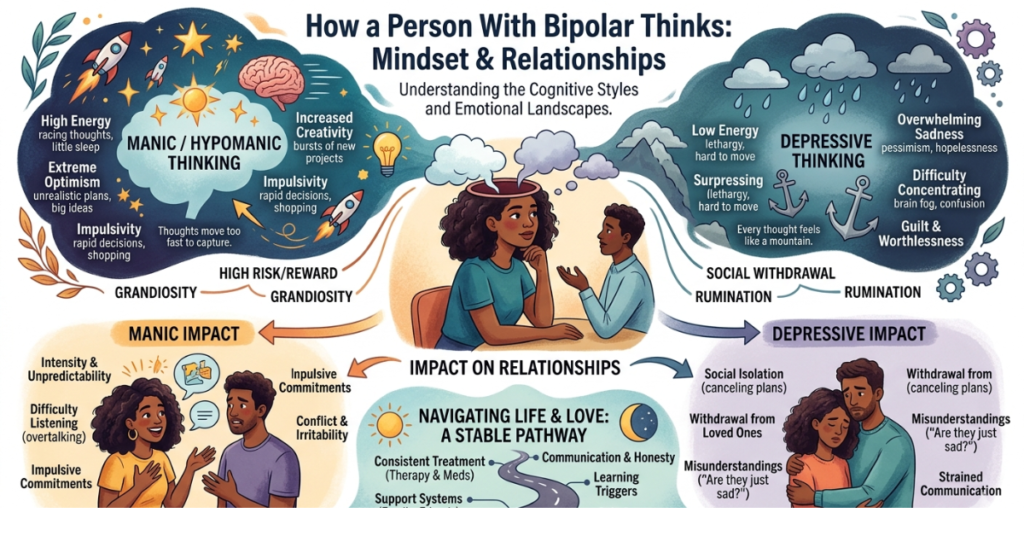
During manic or hypomanic episodes, thoughts how a person with bipolar thinks often become fast-paced and highly optimistic. Their mind may feel like it’s racing from idea to idea.
Common Thought Patterns in Mania
- “I can do anything right now.”
- Feeling unusually confident or invincible
- Jumping quickly between ideas
- Taking risks without considering consequences
- Believing plans will definitely succeed
Mental Characteristics
- Rapid thinking (racing thoughts)
- Increased creativity
- Reduced need for sleep
- Impulsive decision-making
- Overestimating abilities
Someone may start multiple projects, spend money impulsively, or make major life decisions quickly. These choices often make sense to them in the moment because their thinking feels logical and exciting.
How a Person With Bipolar Thinks During Depression
When the mood shifts downward, how a person with bipolar thinks changes dramatically. Thoughts often become slow, negative, and self-critical.
Common Thought Patterns in Depression
- “Nothing I do matters.”
- “I’m a burden to others.”
- Difficulty concentrating
- Loss of motivation
- Feeling overwhelmed by simple tasks
Mental Characteristics
- Negative self-talk
- Hopelessness about the future
- Low energy thinking
- Difficulty making decisions
- Overthinking past mistakes
These thoughts are not just “being sad”—they’re part of the disorder’s cognitive impact.
How a Person With Bipolar Thinks in Relationships
Understanding how a person with bipolar thinks in relationships is especially important. Mood swings can influence communication, trust, and emotional connection.
During Manic Phases
- They may feel extremely affectionate and energetic
- Make big promises quickly
- Desire intense closeness
- Act impulsively (travel plans, spending, etc.)
During Depressive Phases
- Withdraw emotionally
- Avoid communication
- Feel unworthy of love
- Misinterpret neutral comments as criticism
This contrast can confuse partners. One week they’re highly engaged, the next they may seem distant. It’s not inconsistency in feelings—it’s the disorder affecting their thinking.
Balanced Periods: How Thinking Looks When Stable
Not all the time is extreme. Many people with bipolar experience stable periods where their thinking is:
- Clear and balanced
- Rational and grounded
- Emotionally consistent
- Reflective and self-aware
With treatment and coping strategies, these stable periods can become longer and more frequent.
Factors That Influence Thoughts in Bipolar Disorder
Several things shape how a person with bipolar thinks:
- Medication adherence
- Sleep patterns
- Stress levels
- Therapy and coping skills
- Support system
- Substance use
These factors can either stabilize or intensify thought patterns.
How to Communicate Effectively
If you’re interacting with someone with bipolar disorder:
Helpful Tips
- Listen without judgment
- Avoid dismissing their feelings
- Be patient during mood changes
- Encourage professional help
- Set healthy boundaries
Understanding thoughts how a person with bipolar thinks can make conversations more supportive and less frustrating.
FAQs About How a Person With Bipolar Thinks
1. Do people with bipolar think differently all the time?
No. Their thinking changes depending on mood episodes. During stable periods, thinking can be completely typical.
2. How does bipolar affect decision-making?
During mania, decisions may be impulsive. During depression, decision-making can feel slow or overwhelming.
3. Can bipolar disorder affect relationships?
Yes. How a person with bipolar thinks in relationships may shift between intense closeness and emotional withdrawal.
4. Are racing thoughts always part of bipolar?
Racing thoughts usually occur during manic or hypomanic episodes, not necessarily all the time.
5. Can therapy change thought patterns?
Yes. Cognitive Behavioral Therapy (CBT) and other treatments help manage negative or impulsive thinking.
Conclusion
Understanding how a person with bipolar thinks helps remove confusion and replace it with empathy. Their thoughts may shift between high-energy optimism and deep self-doubt, but these changes are symptoms—not personality flaws.
When you recognize how a person with bipolar thinks in relationships and daily life, communication becomes easier and support becomes more meaningful. With treatment, stability is possible, and many people with bipolar lead fulfilling, successful lives.
If you found this helpful, consider exploring related topics like bipolar coping strategies, communication tips, or mental health awareness to deepen your understanding.