
Coffee lovers often find themselves debating the best way to brew the perfect cup. Two of the most popular methods are pour-over and French press. But which one is easier to make, and which suits your taste and lifestyle? In this article, we’ll compare coffee brewing methods like pour-over and French press, helping you find the ideal approach for your morning ritual.
What is Pour-Over Coffee?
Pour-over coffee is a manual brewing method where hot water is slowly poured over coffee grounds in a filter. The water then drips through the grounds, extracting flavors into a carafe or mug below.
Key Features of Pour-Over:
- Control over brewing: You can adjust the water temperature, pour speed, and grind size.
- Clean flavor profile: The filter removes oils and sediment, producing a crisp and bright cup.
- Aesthetic ritual: Many coffee enthusiasts enjoy the meditative process of pouring water evenly over the grounds.
Pros:
- Crisp, clear coffee flavor
- Easy to adjust strength
- Minimal cleanup
Cons:
- Requires attention and patience
- Needs a gooseneck kettle for best results
- Brewing can take 3–5 minutes
What is French Press Coffee?
French press coffee is a full-immersion brewing method. Coarse coffee grounds steep in hot water, and a plunger with a metal filter separates the grounds from the liquid.
Key Features of French Press:
- Full-bodied flavor: The metal filter allows oils and fine particles through, resulting in a richer taste.
- Simple brewing: No fancy tools needed, just hot water and a press.
- Quick preparation: Brew time is usually around 4 minutes.
Pros:
- Bold, rich coffee
- Very hands-on and satisfying
- Easy to make once you know the method
Cons:
- Can have sediment in the cup
- Requires careful timing to avoid over-extraction
- Cleaning can be a bit messy
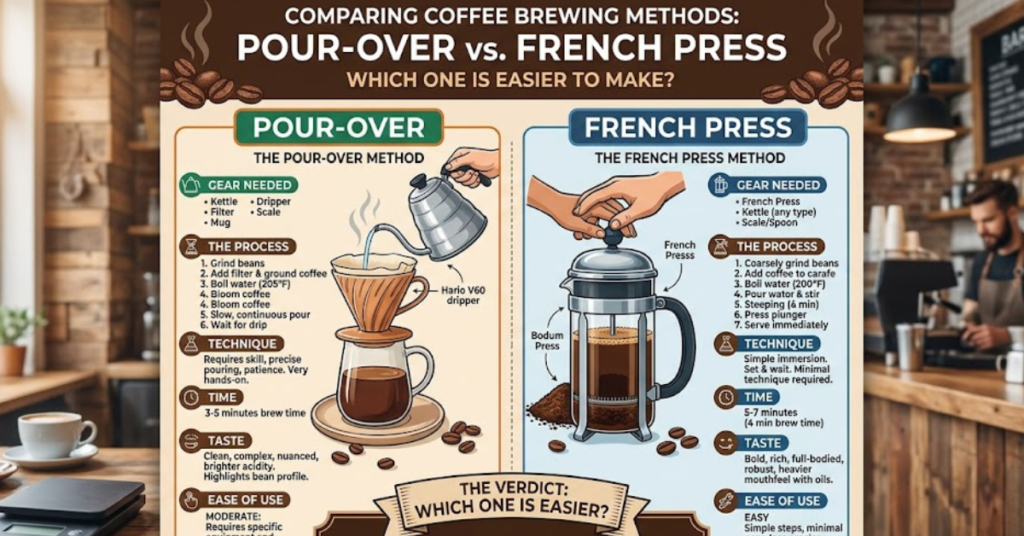
Pour-Over vs French Press: Which One Is Easier to Make?
When comparing coffee brewing methods like pour-over and French press, ease of use often comes down to your experience and priorities.
| Feature | Pour-Over | French Press |
| Time to Brew | 3–5 minutes | 4 minutes |
| Skill Level Required | Moderate | Beginner-friendly |
| Cleanup | Easy | Slightly messy |
| Flavor Profile | Bright & clean | Full-bodied & rich |
| Equipment Needed | Kettle, dripper, filter | Press only |
Verdict: If you value simplicity and bold flavor, French press is easier for beginners. Pour-over takes a bit more patience and technique but rewards with nuanced flavors.
Tips for the Perfect Cup
Whether you choose pour-over or French press, here are some tips to elevate your coffee:
- Use fresh, high-quality beans – grind just before brewing.
- Mind the water temperature – ideally between 195–205°F (90–96°C).
- Measure coffee to water ratio – roughly 1:15 for pour-over, 1:12 for French press.
- Clean equipment regularly – prevents stale flavors.
- Experiment – small tweaks in grind size or brew time can dramatically change taste.
FAQs
Q1: Can I use the same coffee beans for both methods?
Yes! However, coarse beans work best for French press, while medium-fine beans are ideal for pour-over.
Q2: Which method produces stronger coffee?
French press typically results in a richer, bolder cup due to the oils retained in the brew.
Q3: Is one method healthier than the other?
Both are healthy, but French press retains more oils, which slightly increases cholesterol levels. Pour-over filters out most oils.
Q4: Do I need special equipment for pour-over?
A gooseneck kettle and a paper filter are recommended but not mandatory. Standard kettles can work in a pinch.
Q5: Which method is faster for a busy morning?
French press is quicker and more forgiving, making it ideal for those with limited time.
Conclusion
When you compare coffee brewing methods like pour-over and French press, ease of use, flavor preference, and patience are key factors. French press is beginner-friendly and produces rich coffee effortlessly, while pour-over allows precision and a brighter, cleaner taste—but requires more attention.
Whichever method you choose, understanding the process and experimenting with grind, water, and timing can help you brew café-quality coffee at home. Ready to try both? Explore our guide on coffee beans and brewing gear to take your coffee game to the next level.