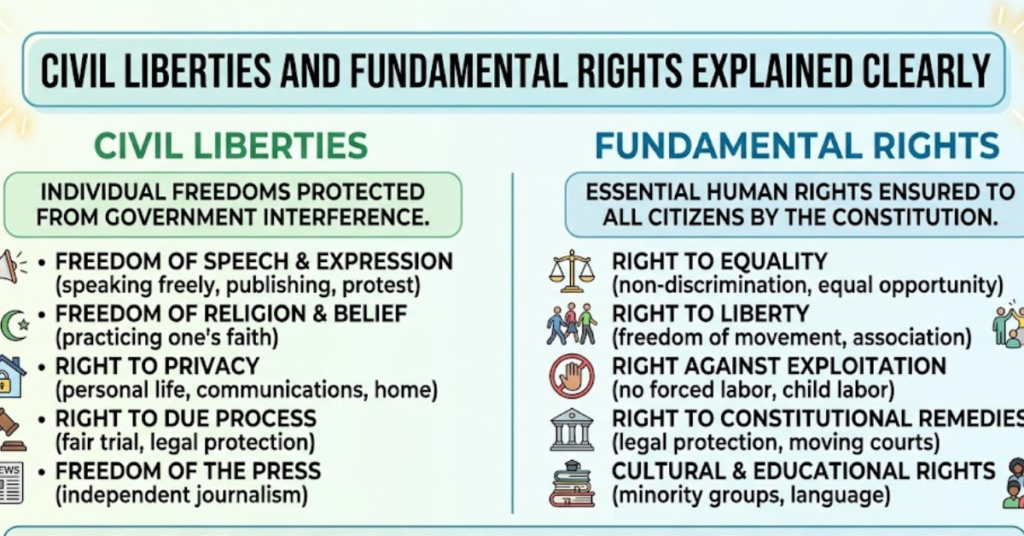

When we talk about freedom, safety, and personal choice, the term civil liberties often comes up. But have you ever wondered, civil liberties are related to which kind of fundamental rights? Understanding this connection is crucial because it helps citizens know what protections the law provides and how these rights shape our daily lives. Let’s dive into this topic in an easy-to-understand way.
What Are Civil Liberties?
Civil liberties are basic individual freedoms guaranteed by law, usually enshrined in a country’s constitution. These liberties ensure that the government cannot interfere arbitrarily in our personal lives. Simply put, civil liberties are the shield that protects our freedom.
Some common examples of civil liberties include:
- Freedom of speech and expression
- Freedom of religion
- Right to privacy
- Right to equality before the law
- Right to assemble peacefully
Notice how these are all fundamental rights that allow individuals to live freely without fear of discrimination or oppression.
The Link Between Civil Liberties and Fundamental Rights
So, civil liberties are related to which kind of fundamental rights? The answer is: they are mostly connected to rights that protect individual freedom and personal liberty.
In most democratic constitutions, fundamental rights are divided into categories, and civil liberties generally fall under these:
- Right to Equality
- Protects against discrimination based on caste, gender, religion, or ethnicity
- Ensures fair treatment in society and by the law
- Right to Freedom
- Includes freedom of speech, expression, assembly, and movement
- Guarantees that individuals can express opinions without fear
- Right against Exploitation
- Safeguards individuals from forced labor, human trafficking, and other forms of abuse
- Supports dignity and personal security
- Right to Freedom of Religion
- Allows citizens to practice, preach, or change religion freely
- Ensures that the state does not interfere with personal beliefs
- Cultural and Educational Rights
- Protect minority groups to preserve their language, culture, and educational institutions
- Promotes inclusivity and diversity
These rights collectively form the backbone of civil liberties in democratic societies. Without them, citizens would be vulnerable to arbitrary decisions and restrictions by authorities.Why Civil Liberties Matter
Civil liberties are not just legal jargon—they directly impact how we live our lives. Here’s why they are important:
- Protect Individual Freedom: They prevent government overreach into private life.
- Promote Equality: They ensure that everyone gets fair treatment under the law.
- Encourage Participation: Citizens can voice opinions, protest, and influence policies.
- Maintain Democracy: Free expression and assembly keep the democratic process alive.
Examples of Civil Liberties in Action
To make this more relatable, here are a few scenarios:
- Freedom of Speech: Criticizing government policies without fear of arrest
- Right to Privacy: Securing personal data from unauthorized surveillance
- Right to Assemble: Participating in peaceful protests or rallies
- Freedom of Religion: Choosing your faith or changing religion without legal consequences
These examples show that civil liberties are not abstract—they affect everyday decisions and freedoms.
FAQs: Civil Liberties and Fundamental Rights
Q1: Are civil liberties and fundamental rights the same thing?
Not exactly. Civil liberties are a subset of fundamental rights that specifically protect individual freedom and prevent government overreach.
Q2: Which fundamental right protects civil liberties the most?
The Right to Freedom (speech, assembly, movement) is the most directly connected to civil liberties.
Q3: Can civil liberties be restricted?
Yes, under certain circumstances like national security or public order, but such restrictions must be reasonable and legally justified.
Q4: Do civil liberties exist in every country?
Most democracies provide civil liberties through their constitutions, but the scope and enforcement vary from country to country.
Q5: Why should citizens know about civil liberties?
Knowing your civil liberties helps you protect yourself from abuse, exercise your freedoms confidently, and participate fully in society.
Conclusion
Understanding civil liberties and their relation to fundamental rights is essential for every citizen. They safeguard your freedom, ensure equality, and help maintain a healthy democracy. By knowing your rights, you can better navigate life, protect yourself, and contribute to a fairer society.
Next time you think about freedoms like free speech or privacy, remember—they are your civil liberties, rooted in fundamental rights that empower you every day.