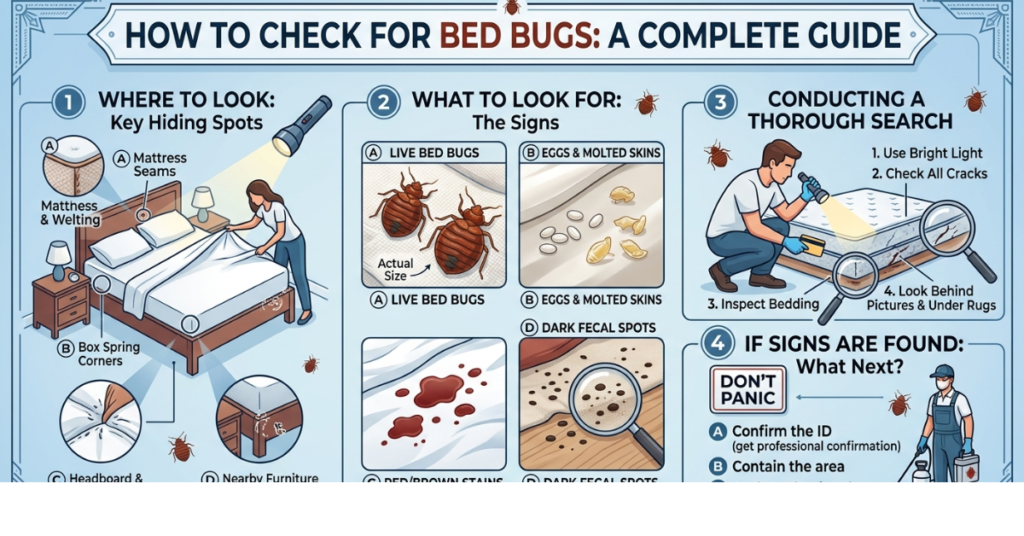

Bed bugs are small, sneaky, and surprisingly tough to spot—but that doesn’t mean you can’t catch them early. Knowing how to check for bed bugs is key to preventing an infestation before it spirals out of control. Whether you’re inspecting your own bedroom or staying at a hotel, being proactive can save you a lot of stress, money, and sleepless nights.
In this guide, we’ll break down the signs to look for, step-by-step inspection methods, and tips for checking for bed bugs in hotels.
What Are Bed Bugs?
Bed bugs are tiny, reddish-brown insects that feed on human blood. They are nocturnal, meaning they usually bite at night while you sleep. Despite their small size, bed bugs can leave itchy welts, stains on sheets, and a lingering musty odor in infested areas.
Key points about bed bugs:
- Size: About 4–5 mm long (like an apple seed)
- Appearance: Flat, oval, reddish-brown
- Behavior: Hide in cracks, seams, and crevices during the day
Knowing these basics makes spotting them a lot easier.
How to Check for Bed Bugs at Home
Checking for bed bugs at home involves careful inspection of your sleeping areas and furniture. Here’s how:
1. Inspect Your Mattress and Bed Frame
Start with the most obvious hiding spots: your bed.
Steps:
- Remove all bedding and look for tiny reddish-brown spots (bed bug excrement).
- Check seams, piping, and folds of the mattress.
- Examine the bed frame, headboard, and under the mattress for small insects or shed skins.
2. Look in Furniture and Upholstery
Bed bugs aren’t limited to the bed. They often hide in couches, chairs, and other soft furniture.
- Check seams, under cushions, and inside folds.
- Use a flashlight to illuminate dark crevices.
3. Examine Baseboards and Carpets
Bed bugs can hide in cracks in baseboards, behind wallpaper, or under rugs.
- Look for shed skins and dark spots along walls and edges.
- Use double-sided tape along carpet edges as a detection tool.
4. Use Bed Bug Interceptors
These small plastic trays go under bed legs and trap bed bugs as they try to climb up or down. They’re a simple and effective monitoring method.
How to Check for Bed Bugs in a Hotel
Travelers face a higher risk of encountering bed bugs. Knowing how to check for bed bugs in a hotel can prevent bringing them home.
Step-by-Step Hotel Inspection
- Don’t place luggage on the bed or floor. Use the luggage rack.
- Inspect the mattress and headboard: Lift sheets and check seams and corners.
- Check furniture and drawers: Look inside nightstands and upholstered chairs.
- Examine walls and curtains: Check for small reddish stains or shed skins.
- Use a flashlight: Bed bugs are tiny and hide in dark spots.
If you see signs of bed bugs, request a room change far from the infested area, or consider switching hotels entirely.
Signs You May Have a Bed Bug Infestation
Recognizing bed bugs early is crucial. Watch out for:
- Red, itchy welts on your skin
- Rusty or dark spots on sheets and mattresses
- Small eggs or shed skins
- Musty odor in the room
Prevention Tips
Even if you find no bed bugs, prevention is better than cure.
- Wash bedding regularly in hot water
- Vacuum and clean floors, baseboards, and furniture
- Be cautious when traveling: inspect hotel rooms before settling in
- Keep luggage elevated and away from beds
FAQs
Q1: Can I see bed bugs with the naked eye?
Yes, adult bed bugs are about the size of an apple seed. They’re small but visible if you look closely.
Q2: How long does it take to know if a hotel room has bed bugs?
A thorough inspection usually takes 5–10 minutes, focusing on mattresses, headboards, and furniture.
Q3: Are bed bugs dangerous to health?
Bed bugs are not known to transmit diseases, but their bites can cause itching, allergic reactions, and sleep disturbances.
Q4: Can bed bugs hide in luggage?
Yes, bed bugs can hitch a ride in luggage, so always check your belongings after traveling.
Q5: Do professional inspections work better than DIY?
Professional pest control services use specialized tools and chemicals, making them more effective for large infestations.
Conclusion
Learning how to check for bed bugs is a crucial skill for any homeowner or traveler. By inspecting beds, furniture, and hotel rooms carefully, you can detect problems early and prevent infestations. Stay vigilant, act quickly, and keep your living spaces clean and safe.