
Noticing tiny red or purple spots on your skin can be alarming. You may wonder whether they’re harmless or a sign of something serious. Petechiae when to worry is a common concern, especially because these small spots can appear suddenly and sometimes signal underlying health issues.
Petechiae are pinpoint-sized dots that occur when tiny blood vessels under the skin break. While they’re often harmless, there are times when they require urgent medical attention. This guide explains what petechiae are, their causes, and most importantly, when you should worry.
What Are Petechiae?
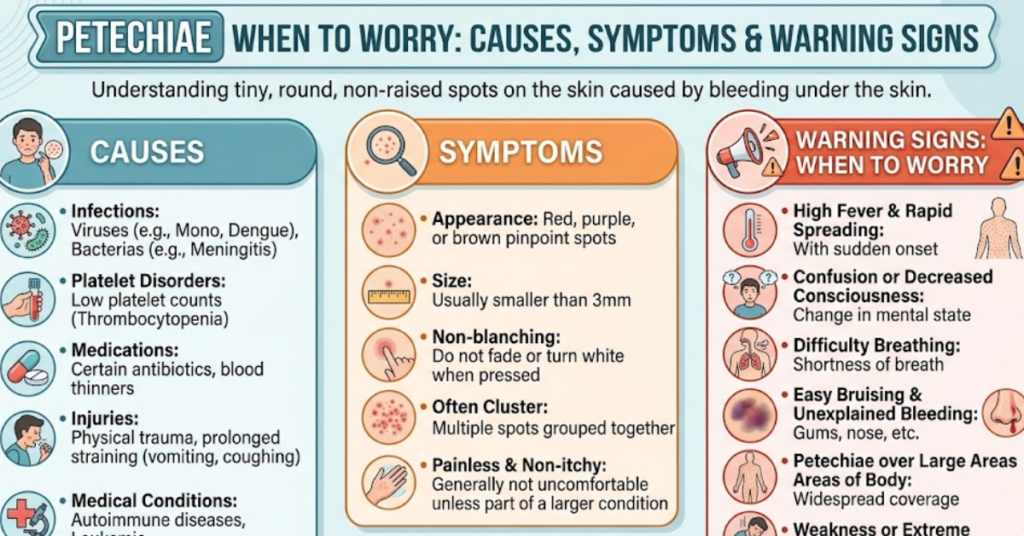
Petechiae are tiny flat spots that appear red, purple, or brown. Unlike rashes, they don’t blanch (turn white) when pressed. They usually show up on the:
- Arms
- Legs
- Chest
- Face
- Inside the mouth
These spots result from bleeding under the skin, often caused by broken capillaries.
Common Causes of Petechiae
In many cases, petechiae are harmless and temporary. Some common causes include:
Minor Causes
- Heavy coughing or vomiting
- Straining during bowel movements
- Intense exercise
- Prolonged pressure on skin
- Mild viral infections
These usually resolve on their own without treatment.
Medical Causes
Sometimes petechiae may be linked to health conditions such as:
- Viral infections (like flu or COVID-19)
- Bacterial infections
- Low platelet count (thrombocytopenia)
- Vitamin deficiencies (especially Vitamin C or K)
- Allergic reactions
- Medication side effects (blood thinners, antibiotics)
Petechiae When to Worry
Understanding petechiae when to worry is crucial. You should seek medical advice if you notice:
Warning Signs
- Spots spreading quickly
- Fever along with petechiae
- Unexplained bruising
- Bleeding gums or nosebleeds
- Fatigue or weakness
- Stiff neck or severe headache
- Confusion or dizziness
These symptoms may indicate serious conditions such as infections, blood disorders, or meningitis.
Serious Conditions Linked to Petechiae
Although rare, petechiae can signal serious health issues, including:
1. Meningococcal Infection
A medical emergency that often includes:
- Fever
- Rash that spreads rapidly
- Sensitivity to light
- Severe headache
2. Leukemia
Petechiae may appear alongside:
- Frequent infections
- Fatigue
- Bone pain
- Pale skin
3. Immune Thrombocytopenia (ITP)
A condition causing low platelets, leading to:
- Easy bruising
- Prolonged bleeding
- Petechiae on legs
Petechiae in Children vs Adults
In Children
Petechiae in kids often come from:
- Viral infections
- Coughing or crying hard
However, if accompanied by fever, seek immediate medical care.
In Adults
Adults should be cautious if petechiae appear:
- Without clear cause
- With medication changes
- Along with fatigue or illness
How Doctors Diagnose Petechiae
A healthcare provider may perform:
- Physical examination
- Blood tests (platelet count)
- Infection screening
- Vitamin level tests
- Medication review
Diagnosis depends on symptoms and medical history.
Treatment Options
Treatment depends on the underlying cause:
- No treatment (minor cases)
- Antibiotics (bacterial infection)
- Vitamin supplements
- Medication adjustment
- Platelet treatment for blood disorders
Never self-medicate without consulting a professional.
When to Seek Immediate Medical Help
Call emergency services if petechiae appear with:
- High fever
- Stiff neck
- Difficulty breathing
- Rapidly spreading rash
- Severe headache
- Confusion
These symptoms require urgent evaluation.
Tips to Prevent Petechiae
While not always preventable, you can reduce risk by:
- Avoiding excessive straining
- Eating vitamin-rich foods
- Staying hydrated
- Monitoring medication side effects
- Treating infections early
FAQs About Petechiae When to Worry
Are petechiae always serious?
No. Many cases are harmless, especially if caused by strain or mild infections. However, sudden unexplained spots should be checked.
How long do petechiae last?
They usually fade within a few days if caused by minor issues. Persistent spots need medical evaluation.
Can stress cause petechiae?
Stress alone doesn’t cause petechiae, but intense coughing or vomiting due to stress may trigger them.
Do petechiae itch?
No, petechiae typically don’t itch or feel raised.
Should I go to the ER for petechiae?
Yes, if they appear with fever, weakness, or spread quickly.
Conclusion
Recognizing petechiae when to worry can help you take timely action. While these tiny spots are often harmless, they can sometimes signal serious conditions. Pay attention to accompanying symptoms, monitor changes, and seek medical advice when unsure.
If you notice persistent or unexplained petechiae, don’t ignore them. Early evaluation provides peace of mind and ensures proper treatment when needed.