
Struggling to fall asleep or stay asleep at night? You’re not alone. Millions of people face restless nights, and one surprising solution might be magnesium. But with so many forms available, the question arises: which magnesium is best for sleep? In this guide, we’ll break down the options, their benefits, and how to use them effectively for better rest.
Understanding Magnesium and Sleep
Magnesium is a vital mineral that helps regulate over 300 biochemical reactions in the body, including those related to sleep. It plays a key role in:
- Calming the nervous system
- Supporting muscle relaxation
- Regulating melatonin, the sleep hormone
Without enough magnesium, it’s common to experience insomnia, restless legs, or poor sleep quality.
Types of Magnesium Supplements
Not all magnesium is created equal. Here’s a breakdown of the most popular forms:
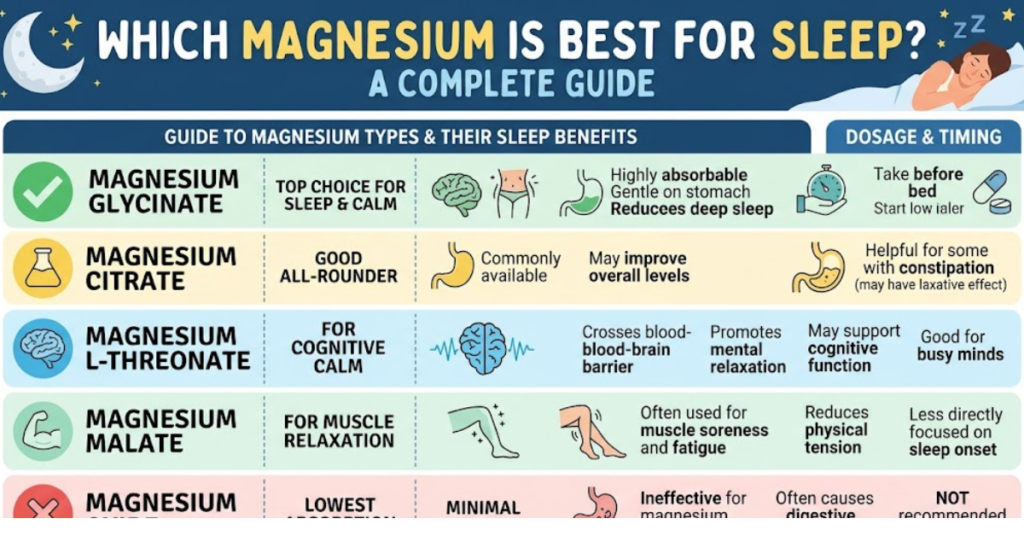
1. Magnesium Glycinate
- Highly absorbable and gentle on the stomach
- Known for its calming effects, ideal for sleep
- Less likely to cause diarrhea than other forms
2. Magnesium Citrate
- Easily absorbed and effective for constipation
- Can help with relaxation, though may have a mild laxative effect
- Recommended if you also want relief from occasional constipation
3. Magnesium Malate
- Supports energy production and muscle function
- Less sedating, better for daytime use
- Can improve sleep indirectly by reducing muscle pain or fatigue
4. Magnesium Threonate
- Unique for its ability to cross the blood-brain barrier
- May enhance cognitive function and support deeper sleep
- Often more expensive than other forms
5. Magnesium Oxide
- Common and affordable
- Not as easily absorbed; more likely used for constipation
- Less ideal if your main goal is sleep
Which Magnesium Is Best for Sleep?
For most people, magnesium glycinate emerges as the top choice for sleep due to its calming properties and high bioavailability. If constipation is also a concern, magnesium citrate may be preferable.
Quick Tip: Take magnesium supplements 30–60 minutes before bedtime to maximize relaxation and sleep benefits.
How to Choose the Right Dose
While magnesium needs vary, general guidelines include:
- Adults: 300–400 mg per day
- Start low and gradually increase to avoid digestive discomfort
- Pair with a light snack for better absorption
Important: Always consult a healthcare professional if you have kidney issues or are on medications.
Lifestyle Tips to Enhance Sleep
Supplementing with magnesium works best when combined with good sleep habits:
- Maintain a consistent bedtime routine
- Limit caffeine and heavy meals before bed
- Keep your bedroom cool and dark
- Consider relaxation techniques like deep breathing or meditation
FAQs
Q1: Can magnesium help with both sleep and constipation?
Yes! Magnesium citrate is effective for sleep and mild constipation, while magnesium glycinate focuses more on sleep without laxative effects.
Q2: Is magnesium safe for long-term use?
For most healthy adults, magnesium supplementation is safe, especially forms like glycinate and citrate. Always follow recommended doses.
Q3: When is the best time to take magnesium for sleeps?
Evening or 30–60 minutes before bedtime is ideal for promoting relaxation.
Q4: Can magnesiums improve sleeps quality for seniors?
Yes, magnesium can reduce sleep disturbances and improve overall sleep quality, which is especially helpful for older adults.
Q5: What if magnesiums doesn’t help me sleeps?
Sleep issues may have multiple causes, including stress, diet, or medical conditions. Consult a healthcare provider for personalized advice.
Conclusion
When asking which magnesium is best for sleep, magnesium glycinate stands out for its calming effects and high absorption. If constipation is also a concern, magnesium citrate is a strong alternative. Pair supplementation with good sleep hygiene for best results.
Ready to improve your sleep naturally? Explore magnesium supplements and lifestyle changes today to enjoy restful nights and energized mornings.