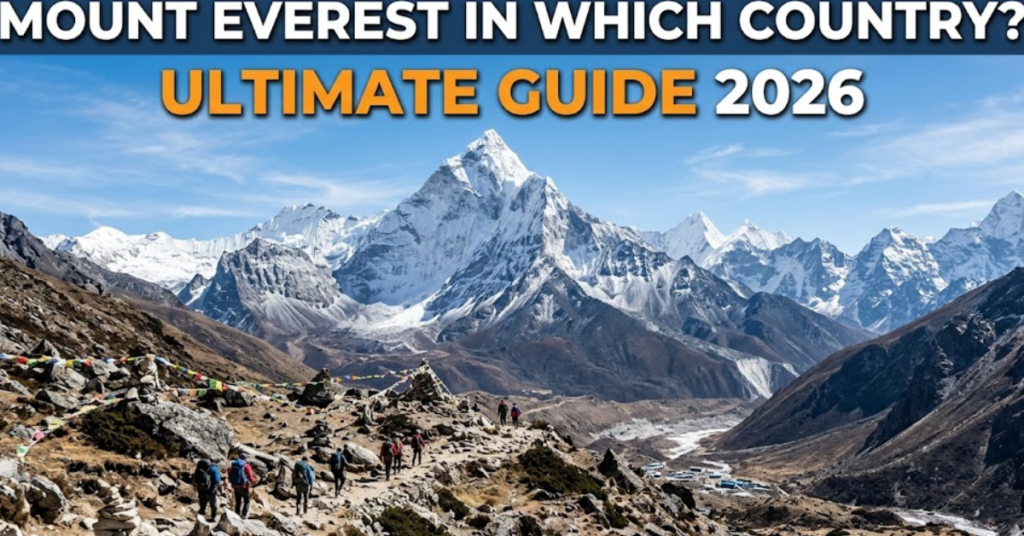

Mount Everest, often called the “Sleeping Beauty” of mountains, has fascinated adventurers and travelers for decades. But have you ever wondered mount Everest in which country it actually stands? This guide dives deep into its location, climbing challenges, and intriguing facts you need to know.
Where Is Mount Everest Located?
Mount Everest is situated in the Himalayas, straddling the border between Nepal and China (Tibet Autonomous Region). The southern face of the mountain lies in Nepal, while the northern face sits in Tibet. Its exact location has made it a unique destination for climbers worldwide.
Key facts about Everest’s location:
- Height: 8,849 meters (29,032 feet) – the tallest mountain on Earth.
- Coordinates: 27.9881° N latitude, 86.9250° E longitude.
- Border: Acts as a natural boundary between Nepal and Tibet.
This location is not only a geographical marvel but also a cultural hotspot, with local Sherpa communities supporting climbers and preserving ancient traditions.
The Name “Sleeping Beauty Mount Everest”
Everest is sometimes affectionately called the Sleeping Beauty, due to its majestic, snow-capped peak resembling a serene figure lying in repose. Its grandeur and mystery have inspired countless stories, documentaries, and mountaineering dreams.
Fun facts:
- The mountain is known as Sagarmatha in Nepal, meaning “Forehead of the Sky.”
- In Tibet, it’s called Chomolungma, which translates to “Mother Goddess of the World.”
How Long Does It Take to Climb Mount Everest?
Climbing Everest is not for the faint-hearted. On average:
- Preparation: 2–3 months for training and acclimatization.
- Expedition: 6–9 weeks from base camp to summit and back.
- Weather delays: Unpredictable conditions can extend the climb.
Most climbers spend time at various camps to acclimatize to high altitudes, reducing risks of altitude sickness. The window for summiting is usually late May and early June, when the weather is most favorable.
Key Challenges of Climbing Mount Everest
Mount Everest is more than just a physical challenge. Here’s why climbers need serious preparation:
- Harsh weather: Temperatures can drop below -40°C (-40°F).
- Thin air: Oxygen levels are only a third of what’s available at sea level.
- Avalanches and icefalls: Dangerous sections like the Khumbu Icefall require careful navigation.
- Crowds: Increasing climber traffic can lead to bottlenecks near the summit.
Despite the dangers, reaching the summit is a dream that inspires thousands every year.
Tips for First-Time Climbers
If you’re considering climbing Everest, remember these tips:
- Train for endurance and high-altitude conditions.
- Hire experienced guides and Sherpas.
- Respect local customs and environmental guidelines.
- Acclimate slowly to avoid altitude sickness.
FAQs About Mount Everest
Q1: Mount Everest in which country is the southern route?
A: The southern route is in Nepal, while the northern route is in Tibet, China.
Q2: How long does it take to climb Mount Everest?
A: Typically 6–9 weeks, including acclimatization, base camp preparation, and summit attempt.
Q3: Why is it called Sleeping Beauty Mount Everest?
A: Because its snow-covered peak resembles a majestic, serene figure, giving it a “Sleeping Beauty” appearance.
Q4: Can anyone climb Mount Everest?
A: Technically yes, but climbers need strong physical fitness, high-altitude training, and proper permits.
Q5: Where is Mount Everest located exactly?
A: On the border of Nepal and Tibet, in the Himalayas.
Conclusion
Mount Everest isn’t just a mountain; it’s a symbol of human endurance, natural beauty, and cultural significance. Knowing where Mount Everest is located helps climbers and travelers appreciate its history and geography. Whether you’re dreaming of summiting the peak or simply exploring from afar, Everest inspires awe like no other.
If you loved learning about Mount Everest, check out our guides on other famous mountains and extreme adventures to fuel your wanderlust.