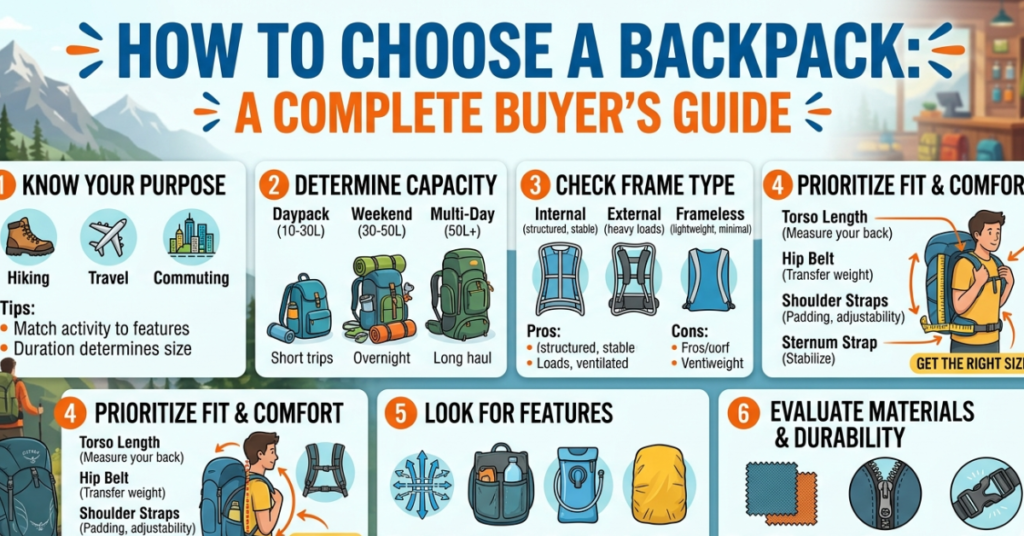

Choosing the right backpack might seem simple—until you actually start shopping. Suddenly, you’re faced with dozens of sizes, materials, straps, and features. If you’ve ever wondered how to choose a backpack that fits comfortably, lasts long, and suits your needs, you’re not alone.
Whether you need a backpack for school, travel, hiking, or daily commuting, the right choice can make your day easier and more organized. This guide breaks everything down into simple steps so you can confidently pick the perfect backpack without feeling overwhelmed.
Why Choosing the Right Backpack Matters
A backpack isn’t just about style. The wrong one can lead to discomfort, back strain, and wasted money. The right backpack, on the other hand:
- Improves posture and comfort
- Distributes weight evenly
- Keeps items organized
- Lasts longer
- Matches your lifestyle
Taking a few minutes to understand how to choose a backpack can save you months (or years) of frustration.
Determine Your Purpose First
Before comparing features, ask yourself: What will I use this backpack for?
Common Backpack Uses
- School or college
- Work or commuting
- Travel
- Hiking or outdoor activities
- Gym
- Everyday carry (EDC)
Your intended use directly affects size, durability, and features.
Choose the Right Backpack Size
Size is one of the most important factors when learning how to choose a backpack.
Small Backpacks 10–20 liters
Best for:
- Daily essentials
- Short trips
- Minimalists
Medium Backpacks 20–30 liters
Best for:
- School
- Work
- Day travel
- Laptop carry
Large Backpacks 30+ liters
Best for:
- Hiking
- Travel
- Heavy loads
- Multi-day trips
Tip: Avoid choosing a bag that’s too large—it encourages overpacking.
Focus on Comfort and Fit
Comfort should never be overlooked. Even a stylish backpack becomes useless if it hurts your shoulders.
Look for These Comfort Features
- Padded shoulder straps
- Breathable back panel
- Adjustable chest strap
- Waist belt (for heavy loads)
- Ergonomic design
When testing a backpack, wear it and adjust the straps. It should sit snugly against your back without sagging.
Check Material and Durability
A good backpack should handle daily wear and tear.
Common Backpack Materials
- Nylon – Lightweight and durable
- Polyester – Affordable and water-resistant
- Canvas – Stylish but heavier
- Leather – Premium look, less flexible
If you travel often, choose water-resistant material to protect electronics and documents.
Evaluate Storage and Compartments
Organization matters more than you think.
Look for:
- Laptop compartment
- Water bottle pockets
- Internal organizers
- Hidden pockets for valuables
- External quick-access pockets
The best backpacks balance storage without becoming bulky.
Consider Weight Distribution
A well-designed backpack spreads weight evenly across your shoulders and back.
Weight Distribution Tips
- Heavier items close to your back
- Use chest strap for stability
- Avoid hanging heavy items externally
- Pack evenly on both sides
Proper weight distribution prevents strain and improves comfort.
Check Style and Design
While function comes first, style still matters. Choose a backpack that suits your personality and daily environment.
Popular styles include:
- Minimalist backpacks
- Travel backpacks
- Roll-top backpacks
- Laptop backpacks
- Vintage canvas backpacks
Pick something you’ll enjoy using every day.
Don’t Forget Security Features
If you commute or travel frequently, security is important.
Look for:
- Lockable zippers
- Hidden compartments
- RFID protection
- Anti-theft design
- Durable zipper quality
These features help protect valuables in crowded places.
Budget vs Quality
You don’t need the most expensive backpack, but extremely cheap ones often wear out quickly.
Smart Buying Tips
- Invest in comfort first
- Check stitching quality
- Read reviews
- Look for warranty
- Compare brands
A mid-range backpack often provides the best value.
Quick Checklist: How to Choose a Backpack
Before buying, ask yourself:
- What will I use it for?
- Is the size appropriate?
- Is it comfortable?
- Does it have enough compartments?
- Is the material durable?
- Does it fit my style?
- Is it within budget?
If you answer “yes” to most of these, you’ve likely found the right one.
FAQs About How to Choose a Backpack
What size backpack should I choose?
Choose based on your needs. For daily use, 20–30 liters is usually ideal. For travel or hiking, consider 30 liters or more.
How do I know if a backpack fits properly?
It should sit comfortably against your back with padded straps and minimal pressure on your shoulders.
Is a laptop compartment necessary?
Yes, if you carry a laptop regularly. It provides padding and protection.
What is the best material for a backpack?
Nylon and polyester are popular for durability and water resistance.
How much should I spend on a good backpack?
A quality backpack typically ranges from mid-budget pricing. Focus on comfort and durability rather than price alone.
Conclusion
Learning how to choose a backpack comes down to understanding your needs, prioritizing comfort, and selecting durable materials. The perfect backpack balances size, organization, and style while keeping your belongings safe and easy to carry.
Take a moment to evaluate your daily routine, compare features, and choose wisely. A great backpack isn’t just an accessory—it’s something you’ll rely on every single day.