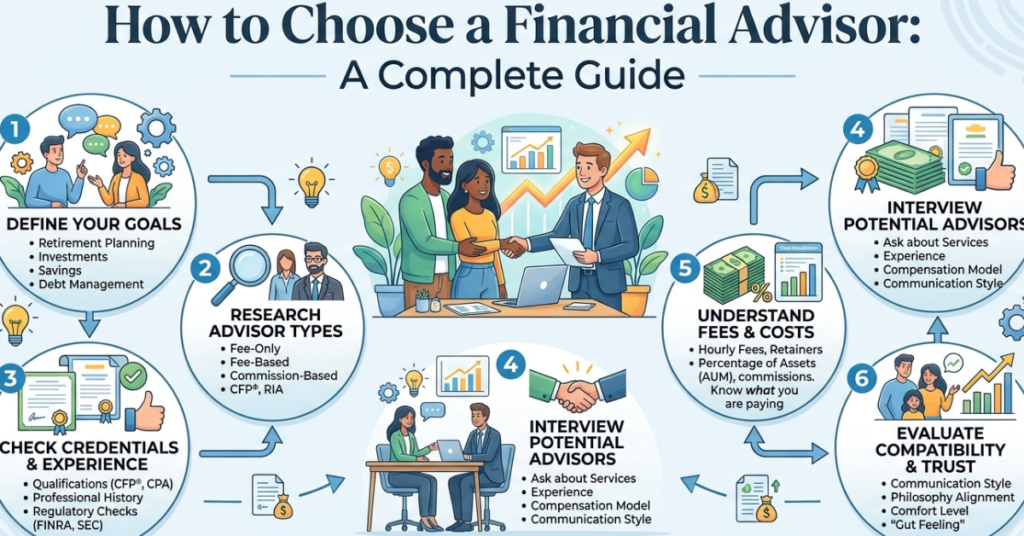

Choosing the right financial advisor can feel overwhelming. With so many options, from robo-advisors to seasoned professionals, it’s easy to wonder: how do I find someone I can trust with my money? This guide will help you understand exactly how to choose a financial advisor who aligns with your goals, values, and financial situation.
Whether you’re planning for retirement, managing debt, or investing for the future, selecting the right advisor can make all the difference. Let’s break down the process in a way that’s simple, practical, and actionable.
Why Choosing the Right Financial Advisor Matters
Your financial advisor is more than someone who manages your money—they’re a partner in your financial journey. A good advisor helps you:
- Build a personalized financial plan
- Navigate complex investment options
- Prepare for taxes and retirement
- Make informed decisions during life changes
Choosing poorly can lead to unnecessary fees, misaligned investment strategies, or even financial losses. That’s why understanding the selection process is crucial.
Types of Financial Advisors
Before deciding how to choose a financial advisor, it helps to know the main types:
1. Certified Financial Planners (CFPs)
- Hold rigorous certifications and education
- Provide comprehensive financial planning
- Must act as fiduciaries, legally obligated to act in your best interest
2. Registered Investment Advisors (RIAs)
- Offer personalized investment advice
- Typically charge a percentage of assets under management
- Often act as fiduciaries
3. Broker-Dealers
- Focus on buying and selling financial products
- Compensation may include commissions
- Not always required to act as fiduciaries
4. Robo-Advisors
- Automated platforms using algorithms
- Cost-effective and convenient
- Best for basic investing or portfolio management
Knowing the differences helps narrow your options and decide which type fits your needs.
Key Factors to Consider When Choosing a Financial Advisor
Here are the most important considerations to ensure you make the right choice:
1. Credentials and Experience
Look for advisors with recognized certifications like CFP, CFA, or CPA. Experience in areas relevant to your goals—retirement planning, investments, tax strategy—adds extra assurance.
2. Fiduciary Duty
A fiduciary must act in your best interest. Always confirm that your advisor is legally bound to prioritize your needs over their own profit.
3. Fee Structure
Financial advisors may charge:
- Fee-only: Flat fees or percentage of assets, no commissions
- Commission-based: Paid for selling financial products
- Hybrid: Combination of fees and commissions
Understanding fees upfront prevents surprises and ensures alignment with your financial goals.
4. Services Offered
Some advisors specialize in investments, while others offer holistic financial planning. Identify what you need:
- Retirement and estate planning
- Tax strategies
- Debt management
- Investment management
5. Communication and Compatibility
You’ll work closely with your advisor, so personal compatibility matters. Ask about:
- Meeting frequency
- Communication style
- Responsiveness to questions
Questions to Ask a Potential Financial Advisor
When interviewing an advisor, consider these questions:
- Are you a fiduciary?
- What certifications do you hold?
- How are you compensated?
- What services do you provide?
- Can you provide references or client testimonials?
- How do you approach risk management?
These questions reveal not just competence, but also transparency and trustworthiness.
Red Flags to Watch For
- Guarantees of high returns or “secret strategies”
- Lack of credentials or transparency
- Pressure to invest in specific products
- Unwillingness to provide written plans or contracts
FAQs
Q1: How much does a financial advisor cost?
A: Costs vary based on the fee structure, services offered, and assets under management. Fee-only advisors typically charge 0.5–2% of AUM per year or a flat fee.
Q2: Do I need a financial advisor if I’m young?
A: Not always, but early guidance can help you avoid mistakes, maximize investments, and set long-term goals.
Q3: How often should I meet my advisor?
A: At least once or twice a year, or whenever major life events occur (marriage, job change, inheritance).
Q4: Can I change my financial advisor?
A: Yes, it’s common to switch if your needs aren’t being met. Ensure any contracts or portfolios are transferred smoothly.
Conclusion
Learning how to choose a financial advisor is about more than credentials—it’s about trust, compatibility, and shared financial goals. By understanding the types of advisors, asking the right questions, and recognizing red flags, you can find a partner who guides you confidently toward financial security.
Start by making a shortlist, conducting interviews, and trusting your instincts. The right advisor can transform your financial journey from stressful to empowering.